The Evolution of Enterprise Network Access
The enterprise networking landscape has undergone profound transformation in recent years. Accelerated by global shifts toward remote work paradigms, organizations face mounting pressure to provide secure, reliable access to corporate resources for users operating beyond traditional security perimeters. This shift has rendered conventional network security approaches increasingly inadequate, driving an urgent need for Zero Trust Network Access solutions architected specifically for distributed, cloud-centric environments.
Traditional remote access mechanisms typically relied on a centralized architecture where VPN concentrators resided within on-premises data centers, protected by perimeter-based security frameworks. This “castle-and-moat” approach served organizations effectively when applications and data predominantly resided within these centralized environments. However, as enterprise resources have migrated toward distributed deployment models spanning multiple clouds, regions, and SaaS platforms, the fundamental limitations of legacy approaches have become increasingly apparent.
Modern enterprises confront several critical challenges when implementing remote access infrastructure:
Suboptimal Application Performance: Traditional VPN architectures that backhaul all remote traffic through centralized data centers before routing to cloud applications introduce significant latency, degrading user experience and productivity.
Complex Security Implementation: As applications disperse across diverse environments, maintaining consistent security policies becomes increasingly complex, often requiring multiple, fragmented security solutions.
Limited Scalability: Conventional VPN concentrators frequently demand substantial upfront investment in hardware and licenses with fixed capacity, resulting in either over-provisioning or capacity constraints during usage spikes.
Operational Complexity: Managing disparate access solutions across multiple environments increases administrative overhead and complicates troubleshooting processes.
Segmentation Limitations: Traditional VPN solutions typically lack native segmentation capabilities, requiring separate concentrators for different network segments—a costly and operationally complex approach.
Zero Trust Network Access: A Strategic Imperative
Zero Trust Network Access (ZTNA) represents a paradigm shift in remote connectivity approaches. Rather than extending implicit trust based on network location, ZTNA implements a security model predicated on continuous verification, least-privilege access, and granular policy enforcement at the application level.
Key principles of the ZTNA architectural framework include:
- Identity-Centric Security: Authentication and authorization decisions based on user identity, device posture, and behavioral attributes rather than network location
- Least-Privilege Access: Providing only the specific application access required for individual users rather than broad network connectivity
- Continuous Verification: Ongoing assessment of trust levels throughout sessions, not merely at connection initiation
- Micro-Segmentation: Fine-grained separation of resources and traffic to minimize lateral movement potential
- Distributed Enforcement: Security policy implementation at optimal network points rather than centralized choke points
Alkira’s Elastic Zero Trust Network Access: Architectural Framework
Alkira has developed a comprehensive ZTNA solution designed specifically for today’s distributed enterprise environments. This solution integrates seamlessly within Alkira’s broader Network Infrastructure-as-a-Service platform, providing organizations with a unified approach to secure remote access.
Core Architectural Components
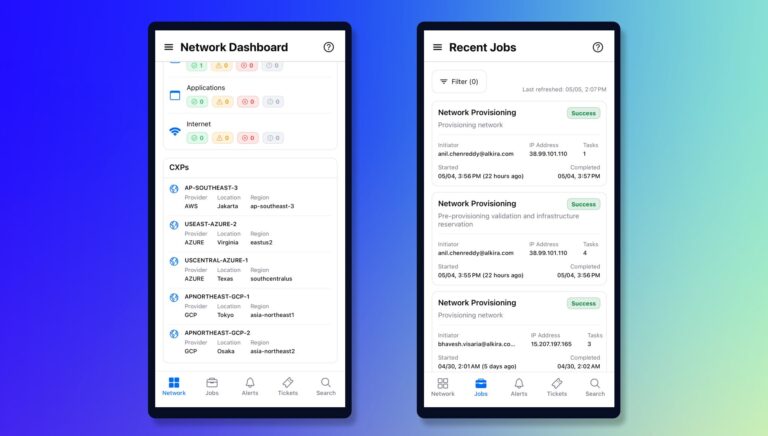
Cloud Exchange Points (CXPs): Alkira’s ZTNA architecture leverages globally distributed Cloud Exchange Points—virtual points of presence built on hyperscale cloud infrastructure. These CXPs serve as intelligent connectivity hubs, providing optimal entry points for remote users while enabling secure access to applications regardless of location.
Unified Backbone: The solution incorporates a high-performance, low-latency global backbone connecting all CXPs, ensuring optimized traffic paths between remote users and applications, whether located in on-premises data centers, public clouds, or SaaS environments.
Integrated Security Framework: Security capabilities are embedded throughout the architecture, enabling micro-segmentation, granular policy enforcement, and seamless integration with leading firewall technologies.
Centralized Management: The entire infrastructure is orchestrated through Alkira’s unified portal, providing comprehensive visibility and control across all environments.
Functional Implementation
Alkira’s ZTNA solution operates through a sophisticated yet straightforward workflow:
- Intelligent Connection Routing: Remote users are automatically directed to the nearest CXP through geo-DNS functionality, optimizing connection performance based on geographical proximity.
- Authentication and Group Assignment: Users authenticate through enterprise directory infrastructure (e.g., LDAP, Active Directory), which Alkira integrates during service provisioning. Upon authentication, users are assigned to specific groups.
- Segment Mapping: User groups map directly to Alkira segments, enabling comprehensive micro-segmentation without requiring separate VPN concentrators—a significant advantage over traditional approaches.
- Policy-Based Access Control: Access to applications is strictly governed by security policies defined within the Alkira portal, ensuring users can only reach authorized resources.
- Traffic Inspection: User traffic can be selectively redirected through globally deployed firewalls using Alkira’s intent-based policies, providing additional security inspection before application access.
Differentiated Capabilities for Enterprise Environments
Alkira’s ZTNA solution delivers several advanced capabilities that address critical enterprise requirements:
Seamless Micro-Segmentation
Unlike conventional remote access solutions that require separate VPN concentrators for each segment, Alkira enables multiple user groups to connect through a single remote access connector while maintaining strict segmentation. This approach simplifies deployment while enhancing security posture.
The architecture supports sophisticated segmentation models:
- User groups map to Alkira groups within segments
- Alkira groups correspond to firewall security zones
- Multiple Alkira groups can map to a single security zone
- Communication patterns are enforced through intra-zone and inter-zone security policies
Dynamic Scalability
The solution incorporates automated scaling capabilities that adjust capacity based on concurrent user demand. This elastic model prevents both over-provisioning and capacity constraints, ensuring organizations only consume resources necessary for current requirements.
Importantly, this scaling extends to licensing models, eliminating the common challenge of purchasing excess capacity to accommodate potential usage peaks—a significant financial advantage compared to traditional approaches.
Optimized Application Access
For cloud and SaaS applications, the architecture eliminates inefficient traffic backhauling by enabling direct access through the nearest CXP. This approach substantially reduces latency while maintaining consistent security policy enforcement.
The solution provides specific optimizations for:
- Public cloud applications across multiple providers and regions
- SaaS applications with direct, secure connectivity
- On-premises applications accessed through the global backbone
- Internet-bound traffic with appropriate security controls
Comprehensive Operational Visibility
Alkira’s portal provides extensive operational monitoring and troubleshooting capabilities, enabling administrators to:
- Diagnose service outages
- Monitor application utilization
- Track bandwidth consumption
- View real-time and historical user information
- Access live flow visibility
- Troubleshoot failed authentication attempts
For organizations employing DevOps methodologies, the platform exposes comprehensive REST APIs supporting all ZTNA functions.
Implementation Methodology
Deploying Alkira’s ZTNA solution follows a streamlined, three-step process:
- CXP Selection and Connector Configuration: Administrators select appropriate CXPs based on geographical requirements and configure remote access connectors.
- Authentication Integration: The solution integrates with existing authentication infrastructure, such as LDAP or Active Directory, and configures necessary certificates for secure connections.
- Group and Policy Definition: Administrators create user groups, map them to appropriate segments, and define security policies before provisioning the complete service.
This simplified approach requires minimal specialized training and enables rapid deployment, with typical implementations completed within minutes rather than the weeks or months often required for traditional solutions.
Strategic Value Proposition
Alkira’s ZTNA solution delivers substantial strategic advantages compared to conventional remote access approaches:
Operational Agility: The as-a-service delivery model eliminates hardware procurement cycles and software installation requirements, enabling rapid deployment and adaptation.
Financial Optimization: With no upfront capital expenditure and consumption-based pricing, organizations avoid over-provisioning while maintaining the ability to scale instantly as requirements evolve.
Enhanced Security Posture: The integrated zero-trust framework with comprehensive micro-segmentation capabilities significantly reduces attack surface while enabling consistent policy enforcement across all environments.
Optimized User Experience: By connecting users to the nearest entry point and providing optimized routing to applications, the solution delivers superior performance compared to traditional backhauling approaches.
Simplified Management: The unified portal provides comprehensive visibility and control across the entire environment, reducing operational complexity and administrative overhead.
Conclusion: Enabling Secure Remote Access for the Cloud Era
As enterprises continue their digital transformation journeys, remote access infrastructure represents a critical capability that directly impacts both security posture and user productivity. Alkira’s Elastic Zero Trust Network Access solution provides a comprehensive framework designed specifically for today’s distributed, cloud-centric environments.
By combining advanced security capabilities with cloud-native scalability and simplified operations, the solution enables organizations to implement robust remote access without the complexity, performance limitations, and financial constraints associated with traditional approaches. This comprehensive approach positions enterprises to support evolving work models while maintaining the security, performance, and operational efficiency required in modern digital environments.
Organizations seeking to implement or enhance their remote access capabilities should evaluate Alkira’s ZTNA solution as a strategic component of their broader security and networking architecture—particularly those with distributed applications spanning multiple clouds and regions.
For more information on implementing Alkira’s ZTNA solution, visit www.alkira.com or contact sales@alkira.com.