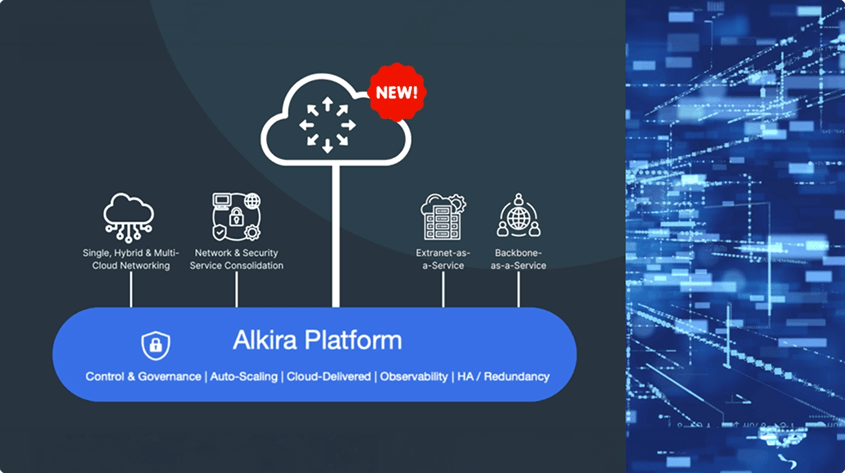
What is Alkira Load Balancer-as-a-Service (LBaaS)?
Alkira Load Balancer-as-a-Service (LBaaS) is a fully managed, cloud-agnostic load balancing solution integrated into the Alkira Cloud Exchange Platform. It enables rapid, secure, and scalable global traffic management across single, multicloud, and hybrid environments. LBaaS leverages F5 BIG-IP integration and Alkira Cloud Exchange Points (CXP) to provide automated deployment, scaling, and management of load balancers with point-and-click simplicity, eliminating manual configuration and reducing operational complexity. Learn more.
How does Alkira LBaaS work?
Alkira LBaaS allows organizations to deploy F5 BIG-IP load balancers globally in minutes via Alkira's intuitive UI, without requiring manual network changes. It supports automated lifecycle management, including provisioning, scaling, and updating instances on demand. Network segmentation is achieved by mapping segments to load balancer route domains, enabling traffic isolation and scalable distribution. Active-active scaling ensures high availability and optimal performance, while granular policy control allows for precise traffic steering and security integration. Real-time monitoring and analytics are available through Alkira's unified management portal. See the Alkira Solution Brief.
What are the key features of Alkira Load Balancer-as-a-Service?
Key features include:
Automated, global deployment of F5 BIG-IP load balancers via Alkira UI
Active-active scaling for high availability and performance
Network segmentation for traffic isolation
Granular policy control with Alkira Traffic Policies
How does Alkira simplify load balancer deployment and management?
Alkira automates the deployment and lifecycle management of F5 BIG-IP load balancers, enabling organizations to provision, scale, and update instances globally in minutes using a drag-and-drop interface. This eliminates manual configuration, reduces operational complexity, and allows centralized policy control across clouds and on-premises environments. Learn more.
What security and compliance features are included with Alkira LBaaS?
Alkira LBaaS integrates advanced security features such as Zero Trust Network Access (ZTNA) and next-generation firewalls directly into the platform. It is SOC 2 and PCI-DSS compliant, ensuring robust protection and regulatory compliance for enterprise workloads. Security appliances can be inserted inline, and granular traffic policies can be applied for match-based security controls. See Alkira's Compliance Page.
What integrations does Alkira LBaaS support?
Alkira LBaaS supports integrations with leading technology providers, including F5 (BIG-IP), Cisco SD-WAN, Palo Alto Networks, Fortinet NGFW, Splunk, ServiceNow, Infoblox, Aruba SD-WAN, Terraform, and Itential Automation Platform. These integrations enable secure, scalable, and automated network and security operations across hybrid and multicloud environments. See Alkira's Technology Partners.
Does Alkira LBaaS provide real-time visibility and analytics?
Yes, Alkira LBaaS offers comprehensive real-time visibility into load balancer health, performance metrics, and traffic patterns through a unified management portal. This enables organizations to monitor, analyze, and optimize network performance and application delivery across all environments.
How does Alkira LBaaS handle network segmentation and traffic isolation?
Alkira's network segmentation capabilities automatically map network segments to load balancer route domains, ensuring traffic isolation and scalable distribution. The service size determines the number of supported segments and interfaces, allowing for efficient management of multiple environments and use cases.
What are the licensing options for Alkira Load Balancer-as-a-Service?
Alkira LBaaS offers two main licensing models:
Pay-As-You-Go (PAYG): Three tiers (Good, Better, Best) with varying levels of functionality, security, and scalability.
Bring Your Own License (BYOL): Allows organizations to use existing F5 licenses, maximizing investment in current infrastructure.
This flexibility ensures cost-effective deployments tailored to organizational needs. See Alkira's Pricing Page.
Does Alkira LBaaS support APIs for integration with other tools?
Yes, Alkira provides APIs, including billing APIs that offer real-time cloud network cost data. These APIs can be integrated with other cost management tools and dashboards, supporting automated monitoring and optimization of cloud costs. Learn more.
Performance & Business Impact
What measurable performance improvements can Alkira LBaaS deliver?
70% faster mean-time-to-resolution for complex issues
These metrics are based on real-world customer deployments and highlight Alkira's ability to accelerate deployment, streamline operations, and reduce operational overhead. See more.
How does Alkira LBaaS help reduce costs?
Alkira LBaaS enables organizations to consolidate load balancers across clouds and on-premises environments, reducing infrastructure and operational costs. The platform's automation and centralized management minimize the need for specialized resources and simplify licensing, resulting in up to 40% lower Total Cost of Ownership (TCO) compared to traditional solutions. Learn more.
What business impact can customers expect from Alkira LBaaS?
Customers can expect:
Faster deployment and time-to-value (proof of concept in as little as 4 hours, full deployment in ~8 weeks)
Operational efficiency through automation and centralized management
Enhanced security and compliance
Scalability and high-performance networking
Measurable ROI and cost savings
These outcomes are supported by customer testimonials and case studies. See customer stories.
Pain Points & Use Cases
What problems does Alkira LBaaS solve for enterprises?
Alkira LBaaS addresses several key pain points:
Complex Multicloud Traffic Management: Abstracts away manual configuration, enabling rapid deployment and centralized policy control across clouds and on-premises.
Security and Compliance: Integrates advanced security features and maintains SOC 2 and PCI-DSS compliance.
Operational Overhead: Automates lifecycle management, reducing the need for specialized resources and minimizing human error.
Visibility and Governance: Provides real-time analytics, health monitoring, and traffic insights for full control and optimization.
Cost and Resource Utilization: Consolidates load balancers, reducing infrastructure costs and simplifying licensing.
Alkira LBaaS is designed for mid-to-large enterprises across industries such as manufacturing, healthcare, telecommunications, financial services, biotechnology, software technology, retail, media & entertainment, and aviation. It is particularly valuable for roles including Network Architects, Cloud Architects, Security Architects, IT Managers/Directors, CloudOps, and business leaders (VP, CTO, CIO, CISO). See case studies.
What are some real-world use cases for Alkira LBaaS?
Common use cases include:
Managing complex, distributed traffic across multicloud and hybrid environments
Ensuring secure, compliant application delivery for distributed workforces
Consolidating load balancers to reduce costs and simplify operations
Rapidly scaling application delivery infrastructure to meet changing business demands
For example, Michaels transformed its network across 1,400 stores using Alkira, and Koch Industries simplified multicloud networking and improved agility. Read the Michaels case study.
Customer Success & Testimonials
What feedback have customers given about Alkira LBaaS?
Customers have praised Alkira for its ease of use, rapid deployment, and operational efficiency. For example:
"Alkira's drag-and-drop interface allowed us to create a proof of concept in just 4 hours, dramatically reducing our deployment time and operational overhead." – Financial Services Customer (See more customer stories)
Additional testimonials highlight Alkira's ability to simplify complex networking tasks and provide an intuitive user experience.
Can you share specific case studies or success stories for Alkira LBaaS?
Yes. Notable examples include:
Michaels: Transformed its network across 1,400 stores in record time. Read the case study.
Koch Industries: Simplified multicloud networking and improved agility. Watch the video.
Warner Hotels: Enhanced networking efficiency and visibility. Watch the video.
Chart Industries: Improved agility, saved costs, and expanded globally. Watch the video.
SITA: Integrated on-premises and cloud environments for aviation. Watch the video.
What is Alkira's pricing model for Load Balancer-as-a-Service?
Alkira offers flexible pricing models for LBaaS:
Consumption-Based Pricing: Pay-as-you-go (PAYG) based on actual usage of provisioned elements (sites, cloud instances, network services, network traffic).
Commitment-Based Pricing: Fixed pricing options for predictable budgeting.
Pricing is determined by the quantity and size of network elements, connectors, firewalls, and data egress. Customers can view live pricing details from the portal or via APIs. See Alkira's Pricing Page.
Competition & Comparison
How does Alkira LBaaS compare to competitors like Aviatrix, Prosimo, Nefeli, and Cato?
Alkira LBaaS offers several differentiators:
True Abstraction Layer: Unlike Aviatrix (which focuses on orchestration overlays) and Nefeli (which uses agent-based solutions), Alkira leverages native cloud infrastructure for end-to-end automation and eliminates manual configurations.
Integrated Security: Built-in ZTNA and next-generation firewalls for secure, compliant application delivery, unlike some competitors who require additional tools.
Full-Stack Networking: Alkira addresses both cloud and traditional network use cases, while Prosimo focuses on application-centric networking.
Global Backbone-as-a-Service: Enables rapid, scalable deployment across hybrid and multicloud environments, compared to Cato's SD-WAN focus.
Drag-and-Drop Simplicity: Intuitive UI for rapid design and deployment, accessible even to non-technical users.
How long does it take to implement Alkira LBaaS, and how easy is it to get started?
Customers can implement a proof of concept in as little as 4 hours, with full production deployment typically taking around 8 weeks. Alkira's drag-and-drop interface, dedicated training platform, and 24×7 monitoring make onboarding straightforward, even for teams without extensive technical expertise. See Alkira Training Platform.
What training and technical support are available for Alkira LBaaS?
Alkira provides a dedicated training platform with detailed guidance, demos, and resources. Customers benefit from 24×7 monitoring, proactive notifications, a diagnostics dashboard for troubleshooting, and dedicated support via support@alkira.com or support tickets. Learn more.
How does Alkira handle maintenance, upgrades, and troubleshooting for LBaaS?
Alkira ensures seamless maintenance and upgrades through proactive notifications, a live diagnostics dashboard, 24×7 monitoring, and dedicated support. These features minimize downtime and operational disruptions, ensuring smooth operations for customers.
Where can I find technical documentation for Alkira LBaaS?
What security certifications does Alkira LBaaS have?
Alkira LBaaS is SOC 2 and PCI-DSS compliant, demonstrating a commitment to securing customer data and maintaining robust operational controls. These certifications ensure that Alkira meets industry standards for security, availability, and confidentiality. See Alkira's Compliance Page.
How does Alkira LBaaS ensure secure connectivity for distributed workforces and applications?
Alkira integrates advanced security features such as Zero Trust Network Access (ZTNA) and next-generation firewalls directly into the platform. This ensures secure, seamless access for distributed teams and applications, addressing vulnerabilities in traditional VPNs and perimeter-based security models.
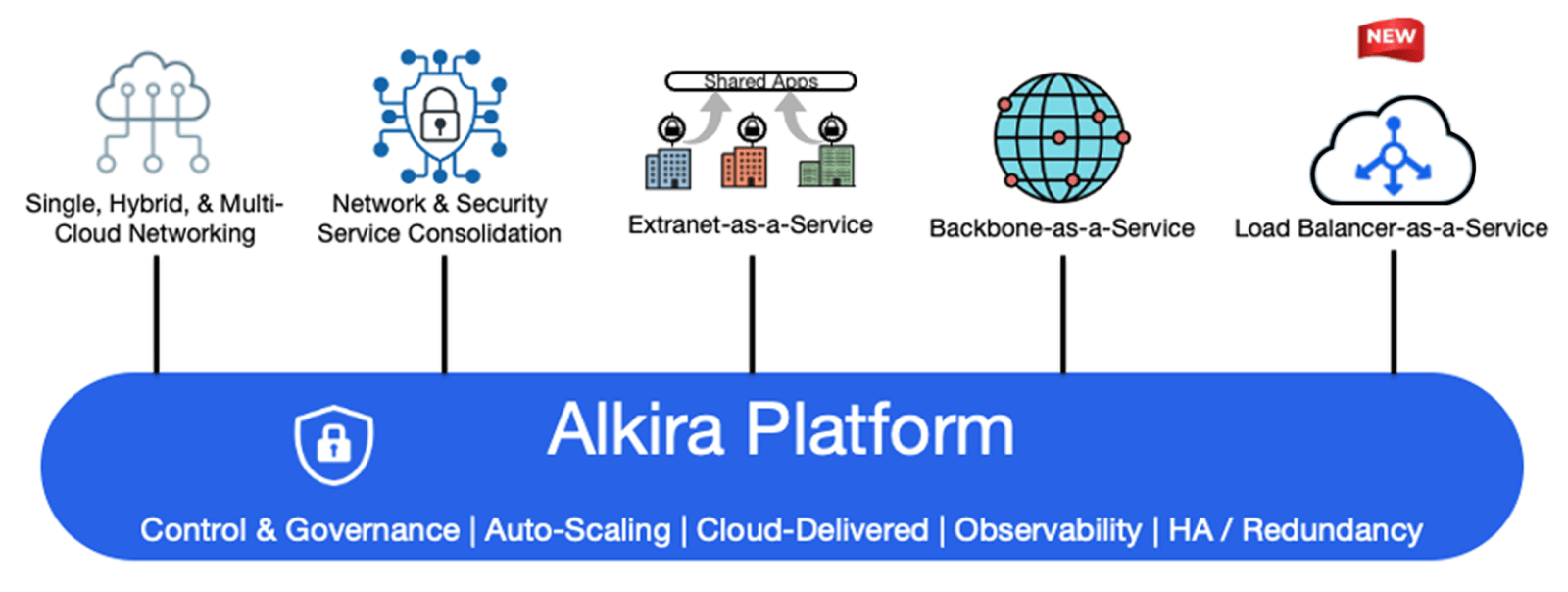
Load Balancer-as-a-Service: A New Use Case in Alkira Platform
In today’s multi-cloud and hybrid environments, enterprises require efficient traffic management and seamless application delivery. Load Balancer-as-a-Service (LBaaS) in the Alkira Cloud Exchange Platform (CXP) simplifies global traffic management, ensuring enhanced scalability, resilience, and security while reducing operational complexity.
In this blog, we will explore Alkira’s capabilities in Cloud Load Balancer deployment, focusing on lifecycle management, network segmentation, scaling, high availability, and manageability across single-cloud, multi-cloud, and hybrid environments.
Seamless Load Balancer Deployment
Alkira provides a fully integrated, automated approach to deploying load balancing services through F5 BIG-IP integration, eliminating the need for manual network configurations. This streamlined process allows organizations to:
Simplify Global Deployment: Deploy load balancing services across any region or cloud environment in minutes with point-and-click simplicity.
Automate Lifecycle Management: Centrally provision and scale instances on demand while maintaining full control over load balancing policies.
Optimize Traffic Distribution: Reduce the need for multiple load balancers by leveraging flexible deployment models that efficiently route traffic, enhance performance, and minimize operational complexity across cloud and hybrid environments.
Integrate Security: Strengthen application security by incorporating firewalls and security appliances inline within Alkira CXP, ensuring a comprehensive security posture.
Enhance Operational Visibility: Gain detailed insights into load balancer health, performance metrics, and traffic patterns through Alkira’s unified management portal.
Enterprise-Grade Capabilities: Full suite of advanced load balancing features, including SSL offloading, layer 4-7 traffic management, and application security
Lifecycle Management: Deploy, Scale, and Manage with Ease
Alkira streamlines the entire lifecycle of load balancing services, from deployment and configuration to scaling and maintenance. The automated provisioning process includes:
Instance creation and routing setup
Infrastructure configuration and network segmentation
Routine updates and monitoring for optimal performance
This automation ensures operational simplicity while giving organizations full control over load balancing policies.
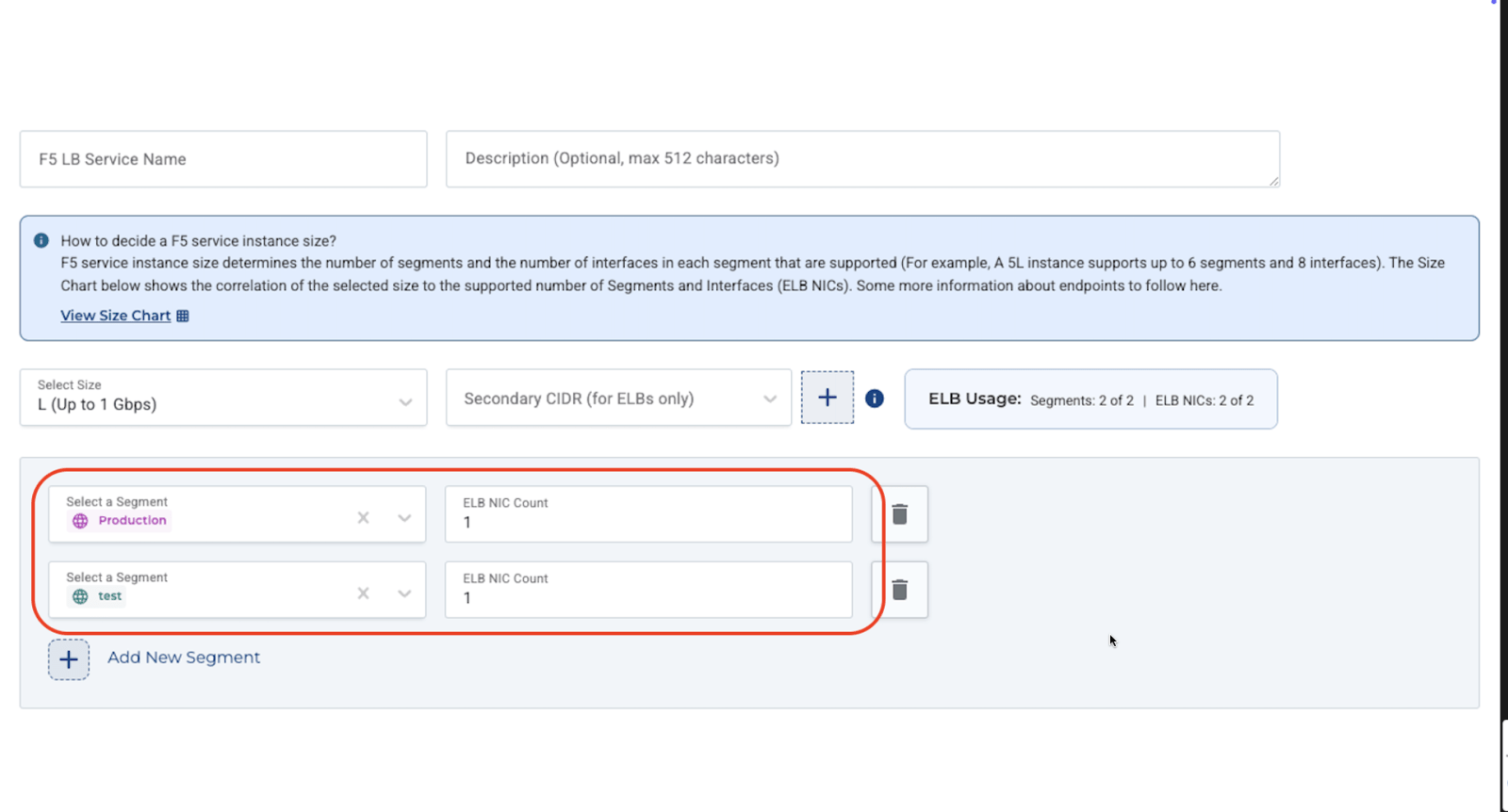
Figure 1: Creating a Load Balancer through Alkira UI Portal
Network Segmentation
Alkira’s network segmentation capabilities ensure traffic isolation for different use cases, minimizing congestion and overlap. Network segments within Alkira CXP are automatically mapped to route domains in the load balancer, facilitating seamless connectivity across environments. The load balancer service size determines the number of supported network segments and network interfaces, enabling scalable and efficient traffic distribution.
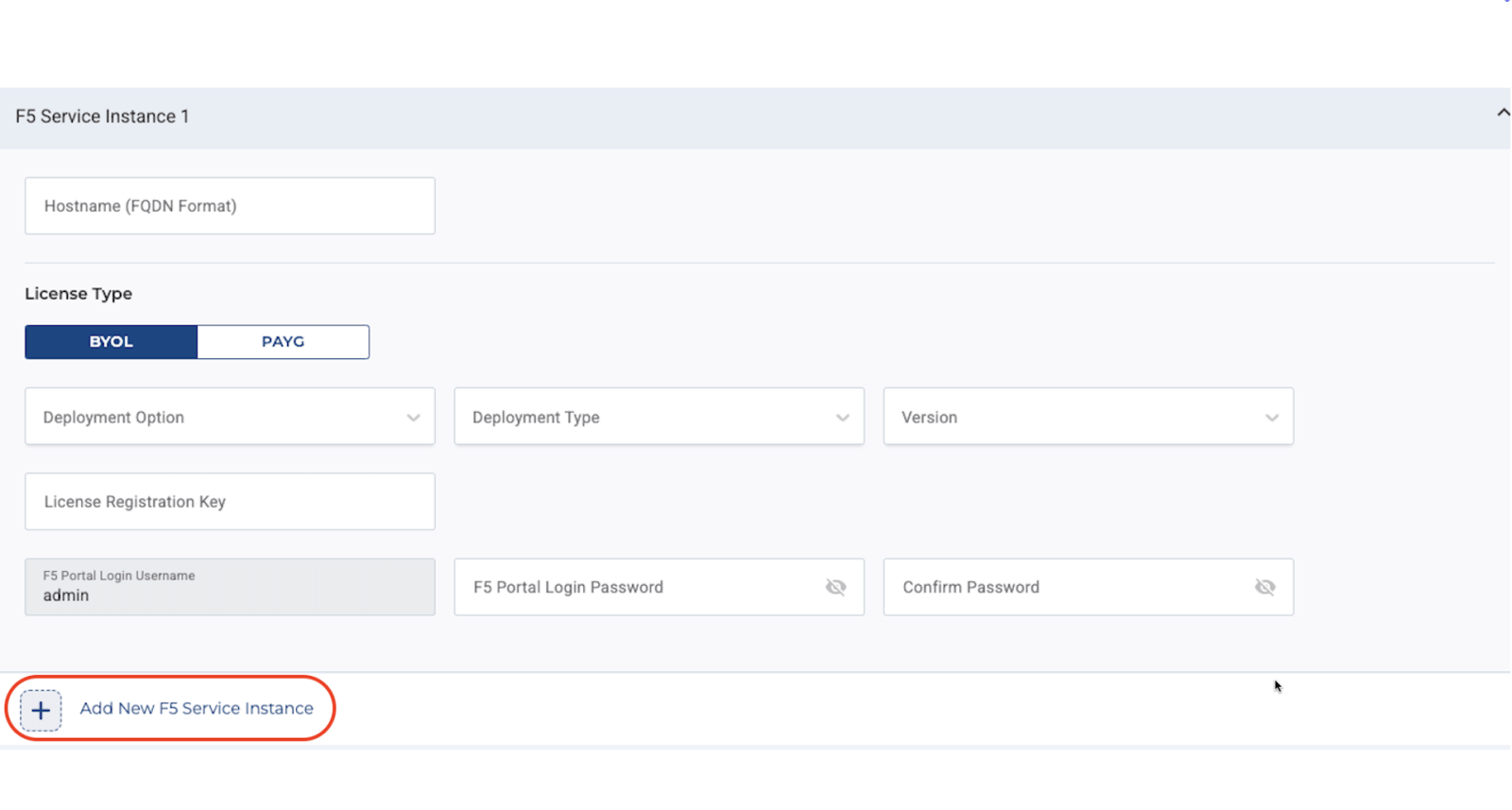
Alkira allows enterprises to deploy multiple F5 service instances to accommodate demand fluctuations. Operating in an Active-Active mode, customers can utilize all available instances in the load balancer service to distribute traffic there by improving performance, scalability, and fault tolerance for uninterrupted application delivery.
Figure 3: Load Balancer service instance configuration
Granular Policy Control for Security & Traffic Steering
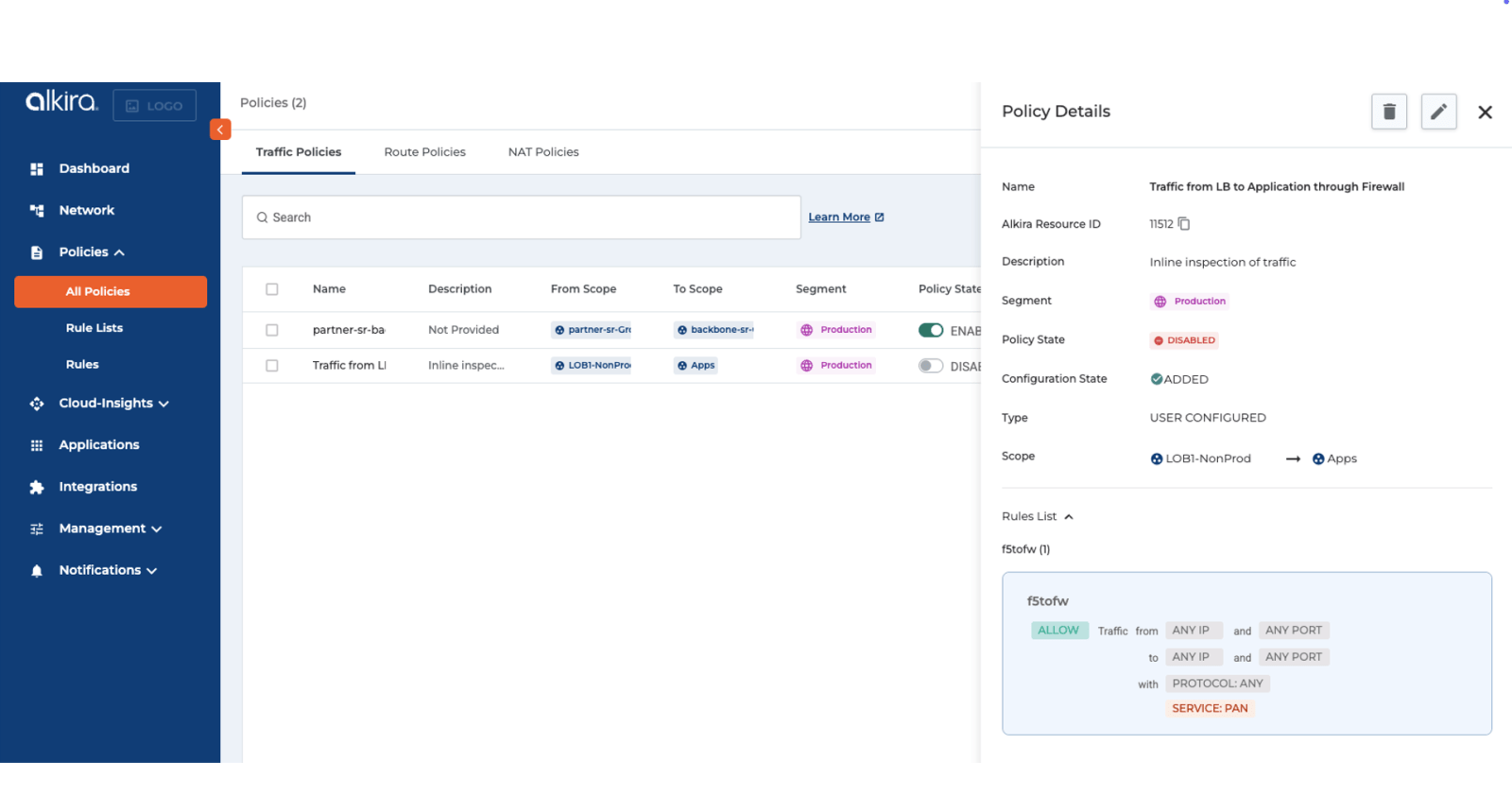
Alkira’s policy-driven framework enables organizations to customize traffic steering based on specific business needs. Customers can integrate firewalls and security appliances inline to ensure robust protection. With Alkira Traffic Policies, users gain precise control over traffic inspection, applying security measures based on match criteria to enhance application security and performance.
Network Traffic Visibility
Alkira offers comprehensive visibility into all traffic traversing the Alkira CXP, allowing enterprises to monitor, analyze, and optimize network performance. With real-time insights and analytics, organizations can ensure efficient traffic management, enhanced security, and seamless application delivery.
Flexible Licensing
Alkira provides multiple licensing models, allowing organizations to select the best fit for their security and performance needs:
Pay-As-You-Go (PAYG): Three tiers offering varying levels of functionality, security, and scalability.
GOOD – Basic load balancing functionality
BETTER – Advanced features including DNS and security capabilities
BEST – Complete feature set including advanced security and application services
Bring Your Own License (BYOL): Enables organizations with existing F5 licenses to integrate them seamlessly, maximizing their investment in current infrastructure.
This flexibility ensures cost-effective deployments while maintaining operational efficiency.
Cost Savings Through Load Balancer Consolidation
By leveraging a single set of load balancer instances, enterprises can manage traffic across multiple segments, cloud providers, and on-premises environments. This consolidation reduces infrastructure costs by eliminating the need for dedicated load balancers in each environment, ensuring:
Lower operational costs
Optimized resource utilization
Simplified multi-cloud traffic management
Modernize your cloud network with Alkira
Alkira provides a simplified approach to cloud networking, eliminating the complexities associated with traditional infrastructure. To learn more about how Alkira can optimize your cloud networking strategy, schedule a demo today.
Guru Kannan is a cloud networking expert with over 15 years of experience in architecting, building, and deploying multi-cloud, hybrid networking, and security solutions. Throughout his career, Guru has worked extensively with enterprise and service provider customers, designing and implementing secure, scalable, and high-performance network architectures across LAN, WAN, data centers, and cloud environments. Guru currently leads strategic product initiatives at Alkira, a company reinventing networking for the cloud era, where he focuses on developing best-in-class multi-cloud networking and security products. Prior to Alkira, he was a Senior Product Manager at Amazon Web Services (AWS), where he played a key role in simplifying AWS customer experiences with Transit Gateway and Network Manager services.
Enterprise networks are expected to run 24/7, and the teams responsible for them need visibility wherever work happens. Cloud environments, partner connections, security services, and provisioning workflows are constantly changing. When something needs attention, network and operations teams need a fast way to understand what happened, assess impact, and take the right next step. That...
Enterprises are moving quickly on AI, but many are still running networking models designed for a slower, more centralized and static era. Today’s network has to connect clouds, data centers, campuses, branches, partner environments, and increasingly private AI infrastructure while enforcing consistent policy across all of it. That creates a new operational reality: every new...
The Digital Operational Resilience Act (DORA) is reshaping how financial institutions in the European Union manage operational risk related to information and communication technology (ICT). As the regulation takes effect, organizations must ensure that their critical ICT service providers support strong operational resilience, risk management, and oversight capabilities. For technology providers supporting financial institutions, this...