How does Alkira help mitigate cloud outages like the Azure Central outage?
Alkira's platform is designed to provide built-in high availability (HA) and disaster recovery (DR) for cloud networking. Alkira Cloud Exchange Points (CXPs) span multiple availability zones by default, eliminating single points of failure. Networks are multihomed across multiple zones, and you can configure cross-region and inter-cloud failover with just a few clicks. If all paths to a CXP are unavailable, traffic automatically reroutes to a backup CXP in another region or even another cloud provider, ensuring business continuity during regional outages. Learn more.
What features does Alkira offer for disaster recovery and high availability?
Alkira offers several features to ensure disaster recovery and high availability:
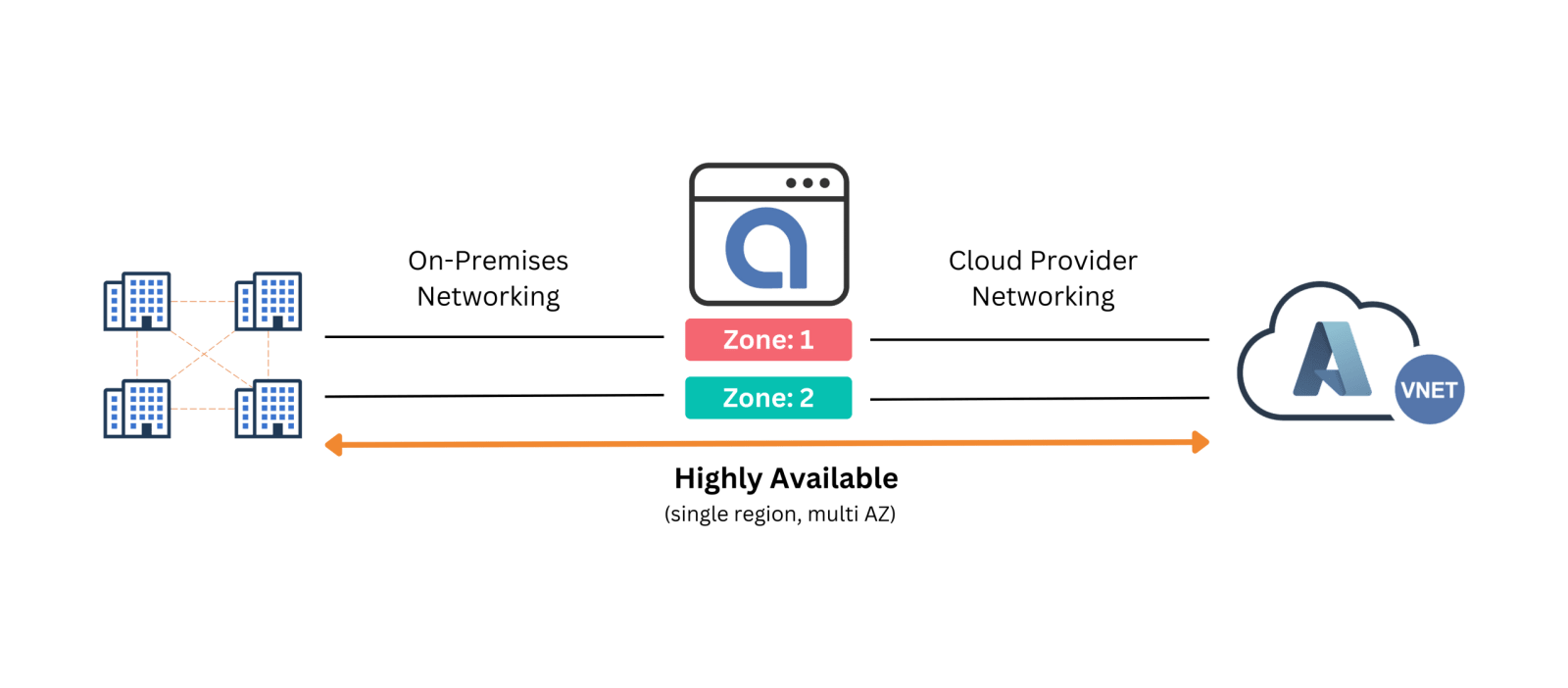
Infrastructure On-Demand: CXPs span multiple availability zones by default.
Active/Active Architecture: Azure VNets connected to Alkira are multihomed to CXPs in multiple zones, so there is no perceived impact during a zone failure.
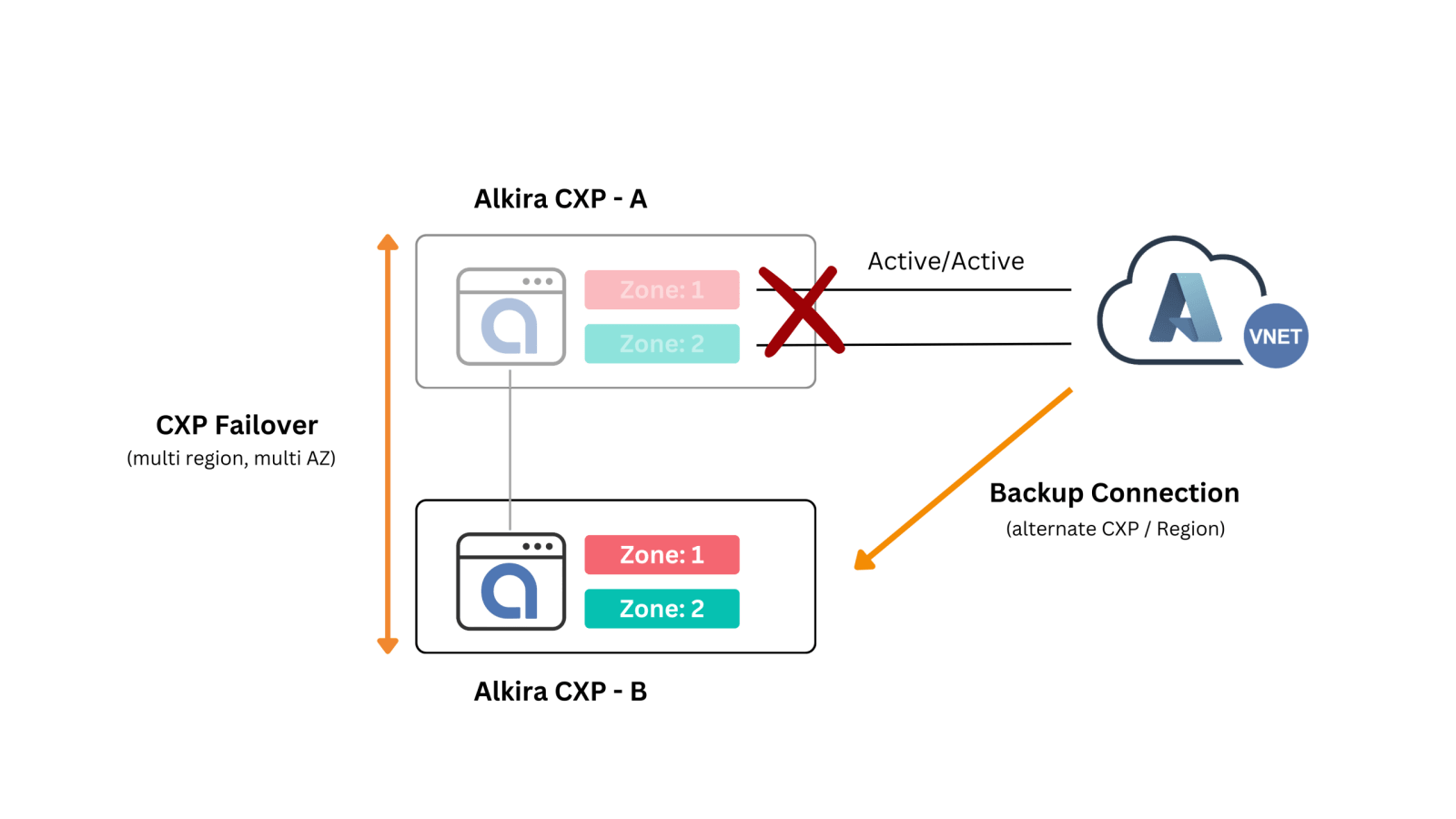
On-Demand Network DR: Easily configure cross-region redundancy; traffic automatically reroutes to a backup CXP in another region if needed.
Optional Inter-Cloud Redundancy: Deploy CXPs across multiple cloud providers for maximum resilience.
How does Alkira's approach to resiliency differ from traditional networking?
Traditional networking often relies on redundant hardware and protocols (like BGP, FHRP) within data centers. Alkira brings this resiliency to the cloud era by leveraging availability zones, multi-region deployments, and a true abstraction layer that eliminates manual configurations. This ensures seamless failover and high availability for both cloud and on-premises networks, with minimal engineering effort.
Features & Capabilities
What are the key features and benefits of Alkira's platform?
Alkira's platform delivers:
Network Infrastructure-as-a-Service (NIaaS): On-demand, hardware-free networking across hybrid and multicloud environments.
Global Backbone-as-a-Service: Scalable, reliable, low-latency connectivity across geographies, reducing deployment times from months to minutes.
Integrated Security: Built-in Zero Trust Network Access (ZTNA) and next-generation firewalls for secure connectivity.
Ease of Use: Drag-and-drop interface and automated DR setup for rapid deployment.
Comprehensive Visibility: Single-pane-of-glass monitoring and management.
Cost Savings: Up to 40% lower TCO compared to traditional solutions.
Scalability: Automatic adjustment of network infrastructure to match bandwidth demand.
What measurable business impact can Alkira deliver?
Alkira customers have reported:
96% reduction in cloud setup time
47% reduction in network management time
70% faster mean-time-to-resolution for complex issues
These outcomes translate to lower costs, faster cloud initiatives, and improved operational efficiency. Learn more.
Does Alkira support integrations with other technology providers?
Yes, Alkira integrates with leading technology providers and platforms, including Cisco SD-WAN, Palo Alto Networks, Fortinet NGFW, F5, Splunk, ServiceNow, Infoblox, Aruba SD-WAN, Terraform, and Itential Automation Platform. These integrations enable secure, scalable, and automated cloud networking. For a full list, visit Alkira's Technology Partners Page.
Does Alkira provide APIs for integration and automation?
Yes, Alkira offers APIs, including billing APIs that provide real-time cloud network cost data for integration with cost management tools and dashboards. These APIs support automated synthesis of billing data from various sources. Learn more.
Where can I find technical documentation and resources for Alkira?
What is Alkira's pricing model and how is it determined?
Alkira offers flexible pricing models:
Consumption-Based Pricing: Pay-as-you-go based on actual usage of provisioned elements (sites, cloud instances, network services, network traffic).
Commitment-Based Pricing: Fixed pricing for predictable budgeting.
Pricing is determined by the quantity and size of network elements (e.g., Alkira Cloud Exchange Points), connectors, next-generation firewalls, and data egress. Customers can view live pricing details from the portal or via APIs. For more, see Alkira's Pricing Page.
Security & Compliance
Is Alkira compliant with industry security standards?
Yes, Alkira is SOC 2 and PCI-DSS compliant, demonstrating a commitment to securing customer data and maintaining robust operational controls. These certifications ensure Alkira meets industry standards for security, availability, and confidentiality. Learn more.
What security features are integrated into Alkira's platform?
Alkira incorporates advanced security features such as Zero Trust Network Access (ZTNA) and next-generation firewalls to ensure secure connectivity for distributed workforces and applications. Customers are also encouraged to manage user access and follow security best practices.
Implementation, Support & Ease of Use
How long does it take to implement Alkira, and how easy is it to get started?
Customers can implement a proof of concept in as little as 4 hours, with full production deployment typically taking about 8 weeks. Alkira's drag-and-drop interface and dedicated training platform make onboarding straightforward, even for non-technical users. Alkira Training Platform.
What training and support resources are available to Alkira customers?
Alkira provides a dedicated training platform with detailed guidance, demos, and resources. Customers benefit from 24×7 monitoring, a diagnostics dashboard for troubleshooting, proactive maintenance notifications, and dedicated support via support@alkira.com or support tickets. Learn more.
How does Alkira handle maintenance, upgrades, and troubleshooting?
Alkira ensures seamless maintenance and upgrades with proactive notifications, a live diagnostics dashboard for network visibility, 24×7 monitoring to meet SLA commitments, and dedicated support for rapid issue resolution.
Customer Success & Use Cases
What problems does Alkira solve for enterprises?
Alkira addresses:
Securing distributed workforce and applications: Integrated ZTNA and NGFW eliminate vulnerabilities in traditional VPNs.
Complexity in multicloud and hybrid networking: Simplifies configurations and reduces deployment times from months to minutes.
Lack of visibility and governance: Single-pane-of-glass tools for monitoring and management.
High-performance networking: Scalable, reliable, low-latency connectivity with automatic infrastructure adjustments.
Alkira is designed for mid-to-large enterprises across industries such as manufacturing, healthcare, retail, telecommunications, financial services, biotechnology, software technology, media & entertainment, and aviation. Target roles include Network Architects, Cloud Architects, Security Architects, IT Managers/Directors, CloudOps, CIOs, CTOs, CISOs, and VPs.
Can you share specific customer success stories using Alkira?
Yes, Alkira has helped:
Michaels: Transformed its network across 1,400 stores in record time. Read the case study.
Koch Industries: Simplified multicloud networking and improved agility. Watch the video.
Warner Hotels: Enhanced networking efficiency and B2B connectivity. Watch the video.
Chart Industries: Improved agility, saved costs, and expanded globally. Watch the video.
SITA: Integrated on-premises and cloud environments for aviation. Watch the video.
What feedback have customers given about Alkira's ease of use?
Customers consistently praise Alkira's intuitive interface and rapid deployment:
"The IT DIY approach was going to take 6 months to be secure and redundant and all. Alkira did it for us in 3 days, and at very low cost." – Network Architect, Large Manufacturer
"We met with Alkira, and after about an hour of us explaining what we needed, we created a POC – and stood that up in a morning. Design-to-POC-setup in about 4 hours." – Sr. Director, Network Architect, Financial Company
"We had gone from a mass of complexity and months of work to a dashboard that allowed us simply to draw our network and deploy it in a few hours." – Matt Hoag, CTO at Koch Industries
What industries are represented in Alkira's case studies?
Industries include manufacturing (Chart Industries, medical device manufacturer), retail (Michaels), healthcare (large healthcare provider), telecommunications, financial services, biotechnology/life sciences, software technology, media & entertainment (Warner Hotels), and aviation (SITA).
Competition & Comparison
How does Alkira compare to competitors like Aviatrix, Prosimo, Nefeli, and Cato?
Alkira differentiates itself in several ways:
Aviatrix: Focuses on orchestration overlays and requires deep cloud expertise. Alkira provides a true abstraction layer, single-click provisioning, and end-to-end solutions for both cloud and traditional networks.
Prosimo: Application-centric networking with limited traditional network use case support. Alkira offers full-stack networking and security for both cloud and traditional environments.
Nefeli: Agent-based solutions with manual configurations. Alkira eliminates manual steps with automated routing and a unified NIaaS platform.
Cato: SD-WAN focus with limited multi-cloud/hybrid support. Alkira delivers a global backbone-as-a-service for multi-cloud/hybrid, with integrated ZTNA and seamless connectivity.
Measurable ROI: 96% reduction in cloud setup time, 47% reduction in network management time, up to 40% lower TCO.
Company, Vision & Recognition
What is Alkira's vision and mission?
Alkira's vision is to transform enterprise connectivity by simplifying cloud networking for the AI era. Its mission is to eliminate the complexity of traditional hardware-dependent networking by providing a cloud-native solution that seamlessly connects hybrid and multi-cloud environments through a unified control plane. Learn more.
What industry recognition has Alkira received?
Alkira has been named among America’s Best Startup Employers by Forbes, a Gartner Cool Vendor, and received the 2024 Excellence Award from Cloud Computing Magazine. It is also listed on CRN’s 2023 Stellar Startups List. Learn more.
Who are Alkira's founders and what is their background?
Alkira was founded by the creators of Viptela, a company sold to Cisco in 2017. The founders leveraged their experience to build Alkira, focusing on simplifying multicloud networking with a cloud-native approach.
Other Technical & Industry Questions
What is the main topic of the blog 'Lessons from Microsoft's Azure Central Outage'?
The blog discusses the July 18th Azure Central outage, lessons learned, and how Alkira's solutions address challenges related to cloud outages by ensuring reliable, scalable, and secure cloud connectivity for enterprises.
What changes are coming to Azure VM internet access in 2025, and how does Alkira help?
Starting in 2025, newly created Azure VMs will no longer have internet access via default source network address translation (SNAT). Manual assignment of public IPs will be required. Alkira can help enterprises adapt to these changes by providing simplified, scalable alternatives for cloud connectivity. Learn more.
On July 18th, a subset of Azure customers experienced issues with services in the Central US region. This incident impacted Azure Virtual Machine availability, which caused downstream impact on various services including, but not limited to, Azure App Service, Azure AD, and Azure Cosmos DB. The issue originated from an incomplete update to the ‘Allow List’ for Storage Scale Units, which failed to include necessary network address information for numerous VM hosts. Azure has released a preliminary post-incident review (PIR), with the final root cause of PIR expected within 14 days of the original outage. You can read the official details here.
Planning for Failure
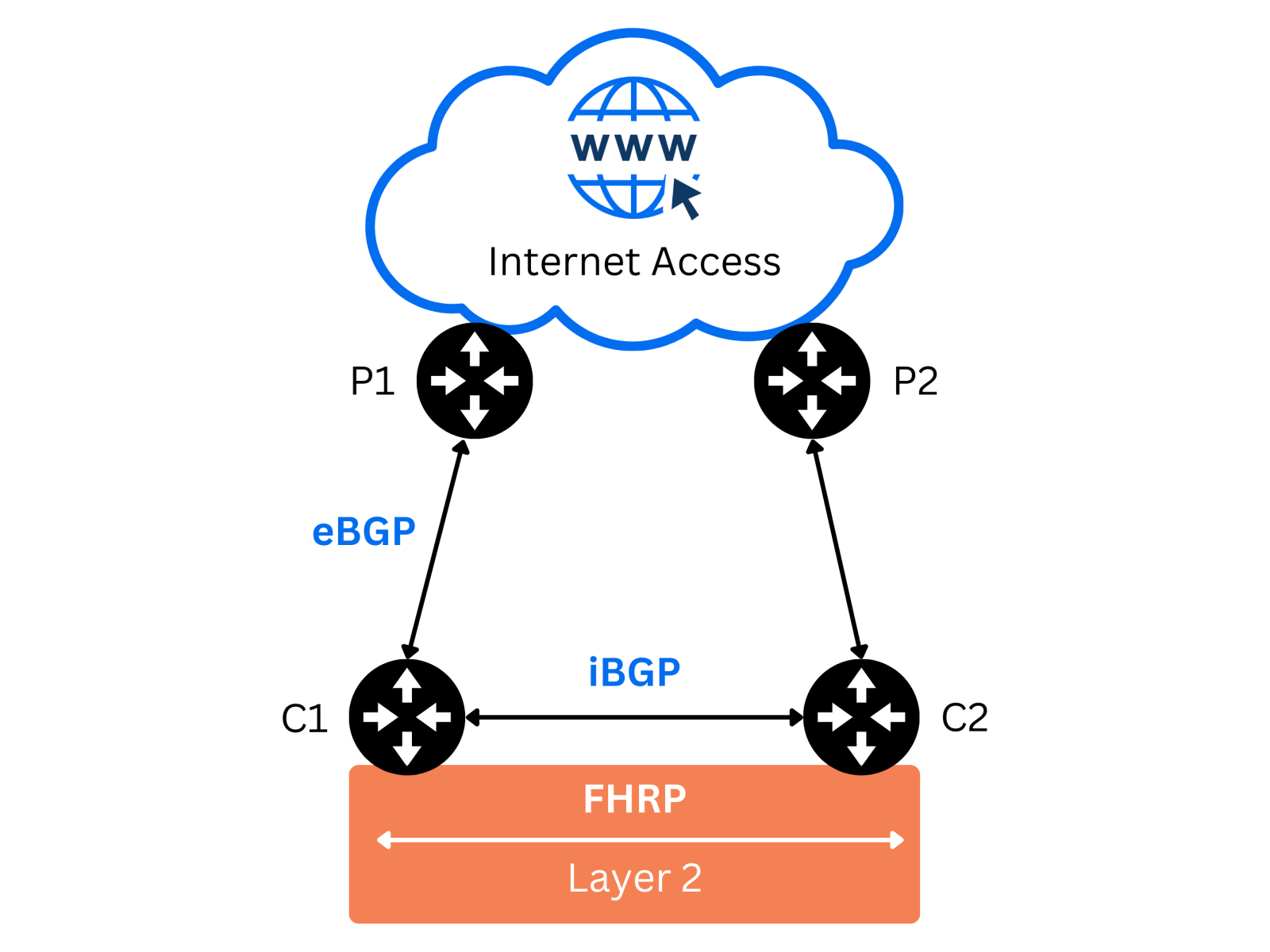
People, processes, and technologies fail. In the age of so many connected devices, systems, and services, the critical task at hand is elevating your infrastructure tolerance to eliminate single points of failure while also providing a means of recovery in regional outage scenarios. Historically, this meant having two of everything in the Data Center world. If one network device fails, you have another network device that is highly available and configured with the appropriate First Hop Redundancy Protocol (FHRP) or routing protocols like Border Gateway Protocol (BGP). This example eliminates single points of failure by deploying redundant sets of hardware and leveraging redundant peerings.
Furthermore, when considering Disaster Recovery (DR), multiple data centers would exist in either an active/standby or active/active scenario to prevent or limit impact and restore services and business operations quickly.
Switching Gears to Cloud
In the world of the cloud, we can use availability zones to reach high availability. These availability zones represent physical and logically separated data centers. To achieve DR capabilities in the cloud, you would leverage multiple cloud regions (which contain multiple availability zones) like so:To reduce and/or eliminate the impact experienced from the recent Azure Central outage, not only would the components of your application need to be available across multiple regions, but so would all the infrastructure. It isn’t just enough to deploy and forget. Network infrastructure especially, must be designed and configured in such a way that, when a regional failure happens, consumers of services aren’t even aware that an outage is happening.
How Alkira Delivers Enterprise-Grade Resiliency
Getting High Availability and Disaster Recovery right can be daunting. Many times, organizations are playing from behind because of the significant engineering and time commitment required from the beginning. Alkira’s Network Platform provides Infrastructure On-Demand with high availability built-in. Alkira’s Cloud Exchange Points (CXPs) span multiple availability zones by default. What does this mean for our customers?
High Availability Made Simple
When a customer connects an Azure VNet to Alkira, it is multihomed to an Alkira CXP in multiple availability zones by default, eliminating single points of failure for networking within a single region. Since Alkira’s architecture runs active/active, this means that, even when an availability zone fails, there is no perceived impact on the customer. Many applications in the enterprise today also have dependencies that are still hosted in on-premises facilities. Any network connected to Alkira will be highly available by default, to maximize uptime for applications or services as a whole, despite what on-premises location or cloud is in scope.
Network DR – On-Demand
In today’s complicated compliance and regulatory landscape for business applications, organizations need a reliable method of cross-region redundancy. For business-critical applications that are available across multiple regions, Alkira provides the means to build your network to withstand cloud region failures. When customers onboard a new network on Alkira’s platform, they have the option to set this up with a few mouse clicks. In the event that all paths are unavailable to an Alkira CXP, the network in scope would have connectivity into an alternate Alkira CXP in a different region. This backup connection would be disabled until a CXP regional failure is triggered.
Optional Inter-Cloud Redundancy
Alkira offers its customers the flexibility to choose which Cloud Service Provider (CSP) to deploy CXPs on. In some instances, it may be desired to deploy critical infrastructure and services in multiple CSPs to increase diversity in the event a single provider experiences a prolonged regional outage. In this scenario, on-premises and cloud network traffic can still route through the backup Alkira CXP, which is hosted on the secondary CSP’s Infrastructure.
Value Driven Optimization
The Hybrid + Multi-Cloud world has thrust Network Engineers into a web of understanding new vendor capabilities, limitations, design, and processes. A fundamental design principle for the next generation of networking that must also serve new technologies like Artificial Intelligence is, that it isn’t how much infrastructure you deploy, but how you deploy that infrastructure. You could deploy a poorly designed cloud network infrastructure with tons of the latest hardware and software, and your performance, high availability, and operations would suffer.
At Alkira, we believe in following the best practices and design principles provided by our partner infrastructure providers and cloud service providers while adhering to first-principle network engineering practices. Our customers see the outcomes of this effort every day in a network built and optimized to provide the best performance and reliability at the right cost.
William Collins is a strategic thinker and catalyst for innovation. Over his career, he has helped enterprises build large-scale networks, driven modernization through cloud adoption, and excels at optimizing complex environments through good design practices and automation. As Director of Technical Evangelism, William focuses on evangelizing Alkira, fostering strong relationships with customers, building community, content creation, and thought leadership surrounding the future of network, security, and automation in the cloud.
Enterprise networks are expected to run 24/7, and the teams responsible for them need visibility wherever work happens. Cloud environments, partner connections, security services, and provisioning workflows are constantly changing. When something needs attention, network and operations teams need a fast way to understand what happened, assess impact, and take the right next step. That...
Enterprises are moving quickly on AI, but many are still running networking models designed for a slower, more centralized and static era. Today’s network has to connect clouds, data centers, campuses, branches, partner environments, and increasingly private AI infrastructure while enforcing consistent policy across all of it. That creates a new operational reality: every new...
The Digital Operational Resilience Act (DORA) is reshaping how financial institutions in the European Union manage operational risk related to information and communication technology (ICT). As the regulation takes effect, organizations must ensure that their critical ICT service providers support strong operational resilience, risk management, and oversight capabilities. For technology providers supporting financial institutions, this...



 Furthermore, when considering Disaster Recovery (DR), multiple data centers would exist in either an active/standby or active/active scenario to prevent or limit impact and restore services and business operations quickly.
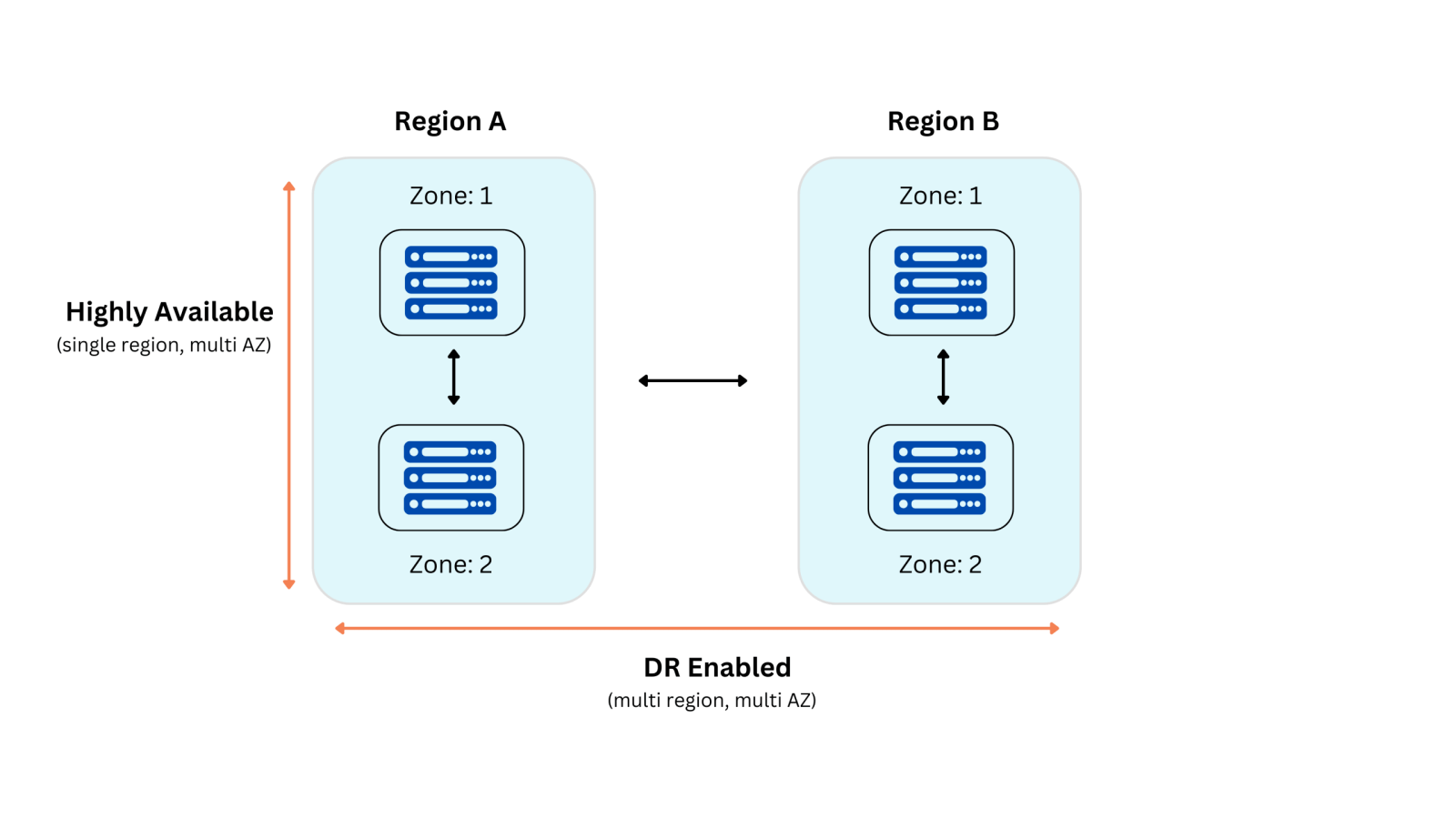 To reduce and/or eliminate the impact experienced from the recent Azure Central outage, not only would the components of your application need to be available across multiple regions, but so would all the infrastructure. It isn’t just enough to deploy and forget. Network infrastructure especially, must be designed and configured in such a way that, when a regional failure happens, consumers of services aren’t even aware that an outage is happening.