Frequently Asked Questions
Extranet-as-a-Service & Business Partner Connectivity
What is Extranet-as-a-Service and how does it transform business partner connectivity?
Extranet-as-a-Service is Alkira's cloud-native solution for secure, scalable, and agile business partner connectivity. It eliminates the need for hardware, manual configuration, and complex capacity planning. By leveraging Alkira's Network Infrastructure-as-a-Service platform, organizations can connect with partners through virtual Cloud Exchange Points (CXPs), a unified management portal, and integrated security services. This approach accelerates partner onboarding, centralizes visibility, and simplifies network architecture, transforming partner connectivity from a technical bottleneck into a strategic business enabler. Learn more.
Why is Extranet-as-a-Service critical for modern businesses?
Extranet-as-a-Service is critical because it addresses the limitations of traditional connectivity models, enabling secure, agile, and efficient partner collaboration. It supports digital transformation, enhances security, reduces operational complexity, and accelerates partner onboarding. By adopting this cloud-native approach, organizations can transform partner connectivity into a strategic enabler for innovation, growth, and competitive advantage. Read the blog post.
What are the key architectural components of Alkira's Extranet-as-a-Service?
Key components include:
- Cloud Exchange Points (CXPs): Virtual hubs for secure partner connections, deployed globally without physical hardware.
- Unified Portal: Centralized management for point-and-click deployment of global networks and partner connections.
- Integrated Security Services: Native integration with leading security vendors (Fortinet, Palo Alto Networks, Cisco, Check Point).
- Multi-Cloud Integration: Seamless connectivity to AWS, Azure, GCP, and OCI at the VPC/VNET level.
- Flexible Connectivity Options: Support for VPN, MPLS, SD-WAN, private circuits, and cloud-native integrations.
How does Alkira's Extranet-as-a-Service accelerate partner onboarding?
Alkira's solution reduces connection provisioning from weeks to hours using automated workflows and standardized templates. For example, a major financial services organization reduced partner onboarding time from 120 days to just 3 days, enabling faster business integration and revenue recognition. Source.
What real-world impact has Alkira's Extranet-as-a-Service delivered?
Alkira's Extranet-as-a-Service has delivered:
- 99% faster partner connectivity provisioning for a large manufacturer.
- Secure partner connectivity for a healthcare provider, enabling new collaboration models.
- Significant reductions in onboarding time and operational overhead for enterprises across industries.
See more examples in the blog post.
Features & Capabilities
What features does Alkira offer for business partner connectivity?
Alkira offers:
- Comprehensive segmentation and micro-segmentation to isolate partner traffic.
- Centralized visibility and control across all partner connections.
- Automated, rapid partner onboarding.
- Granular zero trust access controls.
- Unified architecture for diverse connection types.
- Global scalability with rapid deployment of connectivity hubs.
These features simplify operations, enhance security, and support global business expansion.
Does Alkira support integration with leading security and networking vendors?
Yes, Alkira integrates natively with leading security vendors such as Fortinet, Palo Alto Networks, Cisco, and Check Point. It also supports integrations with Cisco SD-WAN, F5, Splunk, ServiceNow, Infoblox, Aruba SD-WAN, Terraform, and Itential Automation Platform. For a full list, visit the Technology Partners Page.
How does Alkira ensure secure connectivity for distributed workforces and applications?
Alkira incorporates advanced security features such as Zero Trust Network Access (ZTNA) and next-generation firewalls. These features protect against vulnerabilities in traditional VPNs and perimeter-based models, ensuring secure access for distributed teams and applications. Alkira is also SOC 2 and PCI-DSS compliant. Learn more about compliance.
What visibility and management tools does Alkira provide?
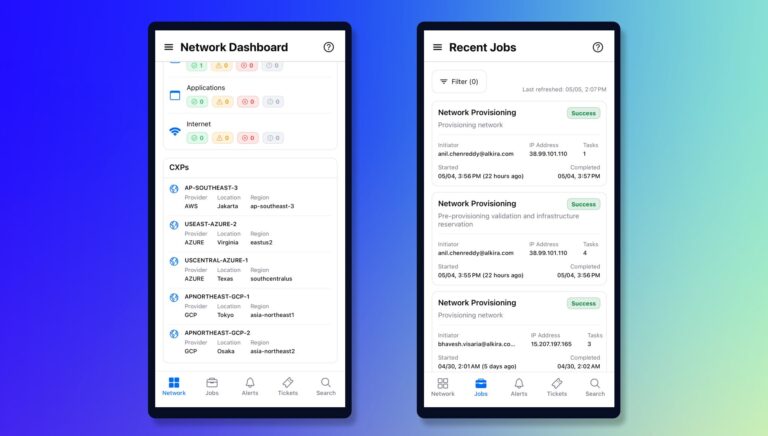
Alkira offers a single-pane-of-glass management portal for monitoring, managing, and optimizing cloud networks. This centralized interface provides unified visibility across all partner connections and network elements, simplifying governance and troubleshooting.
Does Alkira provide APIs for integration and cost management?
Yes, Alkira provides APIs, including billing APIs that offer real-time cloud network cost data. These APIs can be integrated with other cost management tools and dashboards, supporting automated monitoring and optimization of cloud costs. More details.
Pain Points & Business Impact
What common pain points does Alkira solve for business partner connectivity?
Alkira addresses:
- Complex, hardware-centric deployments that require weeks of manual configuration.
- Fragmented architectures with disparate connection types.
- Security and compliance challenges in partner exchanges.
- Operational inefficiency and high overhead.
Alkira's Extranet-as-a-Service simplifies these challenges with cloud-native, automated, and secure connectivity.
What measurable business impact can customers expect from Alkira?
Customers can expect:
- Up to 99% reduction in partner connectivity provisioning time.
- 96% reduction in cloud setup time and 47% reduction in network management time.
- Up to 40% lower total cost of ownership (TCO) compared to traditional solutions.
- Enhanced security and compliance posture.
- Improved business agility and resilience.
These outcomes are supported by customer case studies and testimonials. See more.
How does Alkira's approach to partner connectivity differ from traditional solutions?
Unlike traditional solutions that rely on hardware, manual configuration, and fragmented architectures, Alkira delivers Extranet-as-a-Service as a cloud-native, unified platform. This eliminates the need for physical infrastructure, reduces operational complexity, and enables rapid, secure, and scalable partner connectivity.
Use Cases & Customer Success
Who can benefit from Alkira's Extranet-as-a-Service?
Alkira's solution is ideal for mid-to-large enterprises across industries such as financial services, manufacturing, healthcare, telecommunications, biotechnology, software technology, retail, media & entertainment, and aviation. It is designed for technical roles (Network Architect, Cloud Architect, Security Architect, IT Manager/Director, CloudOps) and business leaders (VP, CTO, CIO, CISO).
Can you share specific case studies or success stories of Alkira customers using Extranet-as-a-Service?
Yes. Examples include:
- A major financial services organization reduced partner onboarding from 120 days to 3 days.
- A large manufacturer accelerated new partner connectivity by 99%.
- A healthcare provider enabled secure partner collaboration for the first time.
For more, see the blog post and customer stories.
What industries are represented in Alkira's case studies?
Industries include manufacturing, retail, healthcare, telecommunications, financial services, biotechnology/life sciences, software technology, media & entertainment, and aviation. See all case studies.
Security & Compliance
How does Alkira ensure security and compliance for partner connectivity?
Alkira is SOC 2 and PCI-DSS compliant, demonstrating strong operational controls and protection of sensitive data. The platform integrates advanced security features such as Zero Trust Network Access (ZTNA), next-generation firewalls, encryption, DLP, IDPS, and robust authentication. Customers are encouraged to follow best practices for user access management. Learn more.
Pricing & Plans
What is Alkira's pricing model for Extranet-as-a-Service?
Alkira offers flexible pricing, including consumption-based (pay-as-you-go) and commitment-based models. Pricing is determined by the quantity and size of network elements (such as Cloud Exchange Points), connectors, firewalls, and data egress. Customers can view live pricing details from the portal or via APIs. See Alkira's Pricing Page.
Implementation & Support
How long does it take to implement Alkira's Extranet-as-a-Service, and how easy is it to get started?
Customers can implement a proof of concept in as little as 4 hours, with full production deployment typically taking about 8 weeks. Alkira provides a drag-and-drop interface, a dedicated training platform, 24×7 monitoring, and dedicated support to ensure a smooth onboarding experience. Explore Alkira Training.
What support and training resources are available for Alkira customers?
Alkira offers:
- A dedicated training platform with guidance, demos, and resources.
- 24×7 monitoring to ensure SLA commitments.
- Dedicated support via email (support@alkira.com) or support ticket.
- Diagnostics Dashboard for live troubleshooting.
These resources help customers adopt Alkira's solutions efficiently and with confidence.
How does Alkira handle maintenance, upgrades, and troubleshooting?
Alkira provides proactive notifications for maintenance, a live diagnostics dashboard for troubleshooting, 24×7 monitoring, and dedicated support to minimize downtime and operational disruptions.
Competition & Differentiation
How does Alkira's Extranet-as-a-Service compare to traditional and competing solutions?
Alkira differentiates itself by offering a true abstraction layer leveraging cloud providers' infrastructure, single-click provisioning, integrated security, and a vendor-agnostic approach. Unlike competitors such as Aviatrix (which focuses on orchestration overlays), Prosimo (application-centric networking), Nefeli (agent-based solutions), and Cato (SD-WAN focus), Alkira delivers a unified, cloud-native platform for both cloud and traditional network use cases. Learn more about Alkira's differentiation.
Why should a customer choose Alkira over alternatives?
Customers choose Alkira for:
- Rapid onboarding and deployment (proof of concept in 4 hours, production in 8 weeks).
- Integrated, advanced security and compliance.
- Vendor-agnostic, unified platform supporting diverse connection types.
- Measurable ROI and operational efficiency (up to 40% lower TCO, 96% reduction in setup time).
- Proven success across industries and use cases.
See customer testimonials and case studies for real-world results.
Technical Documentation & Resources
What technical documentation is available for Alkira's Extranet-as-a-Service?
Alkira provides whitepapers (e.g., On Demand Next-Generation Cloud Firewalls), solution briefs, and a dedicated wiki with detailed technical information. Access these resources at the solution briefs page and wiki page.