

Cloud-Native Networking at Enterprise Scale: Cloud-Only Networking vs a Cross-Domain Operating Model

Most organizations evaluate solutions along two operational lenses, based on what they need to standardize and how far that standardization must extend:
- Cloud-only networking (orchestrating across regions & clouds): Centralizes design, automation, and visibility for connectivity and routing across public cloud environments by orchestrating cloud-native networking constructs.
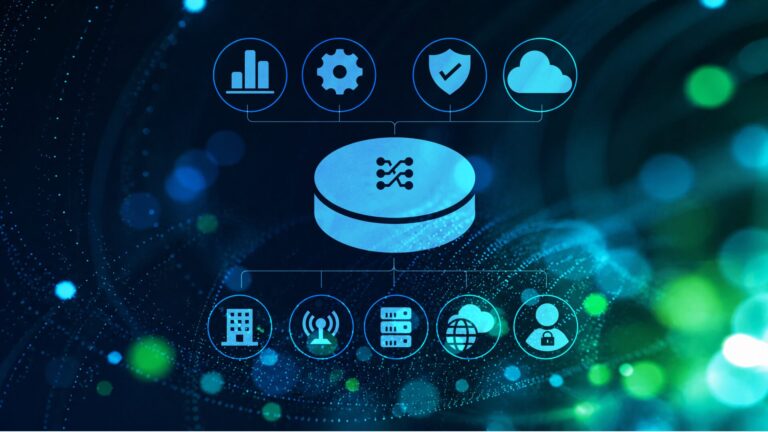
- Cross-domain network operating layer: Centralizes connectivity and segmentation intent across clouds, sites, and partners, enabling repeatable onboarding and governance so policy is applied consistently across domains rather than rebuilt per environment.
Both approaches use centralized control. The difference is the operational scope (cloud-only vs cross-domain) and whether segmentation and governance stays consistent as the enterprise expands.
Why Now
Most enterprises are no longer “cloud plus a data center.” They operate across:
- Multiple clouds and regions
- Private data centers and on prem environments
- SaaS and internet egress
- Partner and extranet connectivity
- Zero trust segmentation requirements across domains
In that reality, the network is not a set of point solutions. It is an operating system for moving traffic and enforcing policy across domains that do not share the same primitives.
This is where the architectural choice becomes durable. It determines how fast you can onboard new connectivity and how hard it is to keep segmentation and governance consistent.
Cloud-Only Networking Model
A cloud-only networking model is best suited when the goal is to make public cloud networking easier to deploy and operate, and when the architectural boundary largely stops at the cloud control plane.
It typically fits when:
- Your control boundary is CSP-native constructs and your requirements are primarily inside one cloud, or across a small number of clouds with similar operating patterns
- “Centralized control” is still cloud-relative (visibility and automation over cloud primitives), rather than a single operating model across clouds, sites, and partners
- Standardization means templates and guardrails for cloud teams, not cross-domain policy enforcement and lifecycle operations across multiple environments
- The operating model aligns to cloud ownership, where network and security consistency outside the cloud is handled by separate stacks, processes, or teams
For organizations with a cloud-scoped mandate, this can be efficient. The tradeoff is that it optimizes cloud network execution, and typically leaves cross-domain consistency, segmentation durability, and end-to-end operational governance to be solved elsewhere.
Limits Of Cloud-Only Networking As Scope Expands
As enterprises extend connectivity beyond cloud environments, the challenge usually becomes less about cloud routing mechanics and more about cross-domain consistency. Common friction shows up in four areas:
1) Domain boundaries
Cloud constructs are designed to operate within cloud accounts and cloud control planes. When connectivity must extend to branches, data centers, partners, and shared services, most teams end up stitching together additional systems and abstractions. That increases integration work and introduces more places for policy to diverge.
2) Policy consistency
When segmentation and governance span domains, policy is often implemented differently in each environment. Even with strong intent modeling, translation across primitives can lead to exceptions and drift over time. Drift shows up as:
- Increased audit effort
- Slower change approvals
- Higher operational risk during incidents and migrations
3) Change blast radius
When connectivity is built and managed per-environment, each new region, account, partner, or path increases the number of surfaces involved in a change. The operational consequence is not only more configuration, but more testing, more dependency mapping, and more ways to regress.
4) Scaling the operation
Even if the technology scales, the operating model may not. Ticket volume, exception handling, and troubleshooting complexity grow quickly when the network is assembled from multiple environment-specific components and processes.
The reality is that a cloud-only networking model that orchestrates between regions and clouds is optimized for cloud networking outcomes. Cross-domain enterprise connectivity introduces requirements that are fundamentally about consistency and day-2 operations across domains.
What a cross-domain, enterprise-wide network operating model changes
A cross-domain network operating model focuses on standardizing how connectivity and segmentation are delivered across clouds, sites, and partners. The objective is to make cross-domain networking feel like a repeatable service, rather than a series of bespoke builds.
In a cross-domain operating model:
- Connectivity is delivered through standardized workflows, not rebuilt for each environment
- Segmentation intent is defined centrally and applied consistently across domains
- New sites, clouds, and partners are onboarded repeatably, with governance built in
- Operations are centralized around a control plane designed for cross-domain policy, visibility, and change management
The value is not just speed. It is repeatability, policy durability, and lower operational overhead as scope expands.
Questions To Ask
Use these questions to choose the approach that matches your operating reality:
- Where is your scope boundary?
Cloud-only, or cloud plus branches, data centers, and partners? - What must be consistent by design?
Routing and connectivity inside cloud domains, or segmentation and governance across domains? - What happens when you add a new environment?
Do policies follow through a single operating workflow, or do they require translation and re-implementation? - What is your day-2 reality?
How many systems and teams must coordinate to onboard, troubleshoot, and change policy safely? - What are you optimizing for?
Cloud network acceleration, or an enterprise-wide operating model for connectivity and segmentation?
If your mandate is primarily cloud networking execution within a bounded scope, a cloud-only networking model that helps with orchestration can be the right fit. If your mandate includes enterprise-wide consistency across domains, you need an operating model that is built for cross-domain governance and repeatable delivery.
Takeaway
This is not a feature checklist. It is an operating model decision.
One approach primarily optimizes cloud networking workflows. The other optimizes cross-domain consistency and day-2 operations, where segmentation and governance must hold across environments that do not share the same primitives.
A useful leadership question is:
Are we standardizing how we configure cloud networks, or how we operate connectivity and segmentation across the enterprise?
How Alkira Can Help
Alkira is aligned to the cross-domain operating model: delivering centralized connectivity and segmentation intent across clouds, sites, and partners through a unified control plane and standardized delivery workflows. The goal is to reduce per-environment build effort and keep policy consistent as enterprise scope expands.
FAQs

Calvin Nguyen