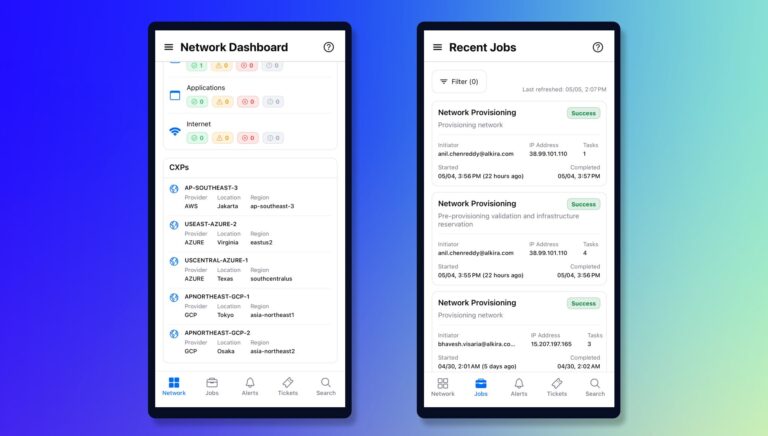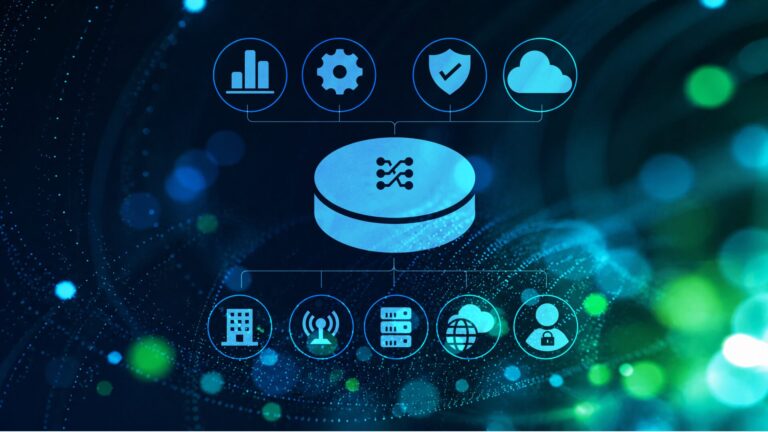



Enterprises see the benefits of hybrid and multi clouds to drive their next wave of innovation and growth. But one significant challenge to adoption has been around monitoring and alerting, .i.e., staying ahead of problems before they actually occur. In this blog, we will see how Alkira’s unified and intuitive alerting dashboard provides the best visibility for these potential issues thereby simplifying day-2 operations significantly.
Alerts
Alerts are real-time messages sent when certain events or conditions occur in a given system. These notifications are pushed via email, texts, slack messages etc to designated recipients so that corrective actions can be taken quickly and preemptively. Some of the common categories of alerts are,
System: Metrics associated with CPU utilization, memory usage, disk I/O and network traffic; these performance metrics detect anomalies related to system performance and resource usage.
Application: Metrics that monitor a given application’s performance; these include response time, request rate, error rate, and database queries. Any deviation here points to application performance issues, bugs, or resource contention.
Security: Metrics related to security events; these comprise failed login attempts, unauthorized access attempts, and malware detection. Any irregularities here point to a serious security breach or attack.
Alert Classification
Environments like hybrid clouds and multi cloud are complex, the potential issues and the alerts that get generated as a result fall under a broad spectrum of anomalies. To effectively manage these alerts, it’s important to first establish a hierarchy based on severity. The hierarchy ensures that alerts are prioritized based on impact and urgency and that appropriate responses are carried out based on the severity.
Alerts are typically classified as
Critical: These are typically business-impacting issues; Usually, a system or application has failed, or a security breach has been detected.
Major: A serious issue has occurred that needs prompt attention; for example a certain application’s performance is sluggish and could potentially go down completely if no intervention is done.
Medium: Alerts that indicate a potential issue and require further investigation; packet drops in the network briefly, but no significant impact is observed otherwise.
Low: Alerts that indicate a minor issue and that can be addressed at a later time.
Alert Pitfalls
Despite their importance in detecting and resolving issues, alerts do suffer from pitfalls that render them less effective or even counterproductive. Following are some of the typical problems,
Alert Fatigue: This is the most common and frustrating issue; the environment generates an overwhelming volume of alerts, which leads to decreased response time. This happens when alerts are not prioritized or filtered correctly; many low-priority or false positive alerts distract stakeholders from effectively investigating and resolving critical issues.
False positives: False positive alerts occur when an alert is triggered, but there is no actual issue or condition that requires attention. This can occur when alerts are not properly configured, or the monitoring tools have issues.
Insufficient context: These alerts have very little or no data, which makes it difficult for responders to identify, isolate, and address the issues.
Lack of integration: Without unified monitoring tools for the hybrid and multi-cloud environments, siloed information generated from the alerts makes it difficult to pinpoint systemic issues.
Multi-Cloud Alerting with Alkira
Alkira is the pioneer in building robust hybrid and multi-cloud environments; customers can securely connect branches, users, and data centers with different cloud providers, all using an as-a-Service model. The unified Alkira portal that enables secure and hybrid connectivity also provides a simple, intuitive, and standardized view of all alerts in the hybrid system, greatly simplifying issue identification and resolution. Following are some of the salient alerts generated by Alkira,
Network connectivity down
Using a robust proprietary mechanism, the Alkira solution proactively monitors all endpoints (across all regions) for network connectivity. If a failure is detected, an alert is generated right away, warning the user of a potential impact on workloads in a specific region for the given cloud provider.
IP Address Overlap
Traditionally IP address overlap happens when two previously separate networks are connected, often caused by organizational mergers and acquisitions. In multi-cloud environments, virtual networks (VPCs, VNETs etc) are often created in an agile manner; overlapping L3 routing connections may cause critical applications to become unreachable or unstable. Alkira auto-detects these route overlaps in a given segment, raises a high alert so corrective action can be taken instantly.
Security Alerts
Alkira provides the ability to seamlessly insert third-party firewalls (PAN, Checkpoint, Fortinet etc) with the ability to auto-scale up or down based on bandwidth utilization. If the firewall instances go down abruptly, alerts are generated so that any arising security vulnerabilities can be addressed instantly. Also, if there are too many invalid login attempts, a notification is sent to registered users to curb any malicious intent or activity.
Billing Alerts
As with all cloud services, the Alkira solution is elastic; connectivity to hybrid clouds can be spun up or torn down on demand. Administrators can set billing thresholds for cloud usage using Alkira. If thresholds are crossed, billing alerts are raised so that cloud spending is within budget limits.
ServiceNow / Splunk Integration
Splunk and ServiceNow offer popular alerting and incident management solutions that many customers use for visibility and monitoring of their infrastructure. Alkira also offers deep integration into customers’ existing ServiceNow and Splunk deployments; alerts can then be viewed and managed centrally for all of their assets.
Conclusion
Alkira’s portal offers a cohesive and a single pane alerting dashboard for complex hybrid cloud environments. Using proprietary tools and leveraging AI/ML algorithms, Alkira extracts the most actionable alerts from all data sources and relays those alerts to all stakeholders with appropriate severities.
To learn more about Alkira’s solution https://alkirastg.compiledrogue.com//resources/
Take your own tour of the Alkira solution https://alkirastg.compiledrogue.com//virtual-tour
To request your personalized demo https://alkirastg.compiledrogue.com//demo