Frequently Asked Questions
Product Information & IPFIX Integration
What is Alkira's IPFIX integration and how does it work?
Alkira's IPFIX (Internet Protocol Flow Information Export) integration enables enterprises to export detailed network flow information from both cloud and on-premises environments to external collectors or analyzers. This provides granular visibility into network traffic, including source and destination IP addresses, ports, protocols, and more. Alkira's cloud-native approach allows for real-time and historical traffic flow analysis across hybrid and multicloud networks, supporting enhanced monitoring, troubleshooting, and compliance reporting. [Source]
How do I configure Alkira's IPFIX export?
Configuring Alkira's IPFIX export is a straightforward two-step process: (1) Define a new Netflow/IPFIX collector profile (cloud or on-premises), and (2) enable IPFIX Flow Collection in the Alkira Policy workflow. This process eliminates the need for complex, manual configurations traditionally required for IPFIX setups. [Source]
What are the key benefits of Alkira's IPFIX export?
Key benefits include enhanced visibility into traffic patterns and bandwidth utilization, rapid troubleshooting with real-time and historical flow analysis, compliance support with detailed traffic logs, and operational efficiency—such as a 47% reduction in network management time and a 70% faster mean-time-to-resolution. [Source]
Is Alkira's IPFIX export compatible with popular collectors like Splunk?
Yes, Alkira supports sending flows to multiple collectors, including Splunk, both in the cloud and on-premises, using private or public IP addresses. This flexibility allows organizations to leverage their existing monitoring and analytics tools. [Source]
How does Alkira's IPFIX integration help identify network anomalies in real-time?
Alkira's IPFIX export provides granular flow data, enabling real-time detection of unusual traffic patterns and security threats. Integrated with Alkira's dashboard, users can quickly visualize and respond to anomalies, improving network security and performance. [Source]
Features & Capabilities
What features does Alkira offer for network visibility and management?
Alkira offers a comprehensive set of features for network visibility and management, including IPFIX export, a drag-and-drop interface for configuring flow collectors and policies, multi-collector support, scalable and automated flow export, integrated security (Zero Trust Network Access and next-generation firewalls), and single-pane-of-glass monitoring tools. [Source]
How does Alkira simplify compliance reporting for regulated industries?
Alkira's IPFIX export delivers detailed traffic logs that support compliance audits for standards such as SOC 2 and PCI-DSS. Reports can be generated directly from the platform, helping organizations meet industry requirements for audit trails and data security. [Source]
Does Alkira support integrations with other technology providers?
Yes, Alkira integrates with a wide range of technology providers and platforms, including Cisco SD-WAN, Palo Alto Networks, Fortinet NGFW, F5, Splunk, ServiceNow, Infoblox, Aruba SD-WAN, Terraform, and Itential Automation Platform. These integrations enhance connectivity, security, and automation for enterprise networks. [Source]
Does Alkira provide APIs for integration and automation?
Yes, Alkira provides APIs, including billing APIs that offer real-time cloud network cost data. These APIs can be integrated with other cost management tools and dashboards, supporting automated monitoring and optimization of cloud costs. [Source]
Security & Compliance
What security and compliance certifications does Alkira have?
Alkira is SOC 2 and PCI-DSS compliant, demonstrating its commitment to securing customer data and maintaining robust operational controls. The platform also integrates advanced security features such as Zero Trust Network Access (ZTNA) and next-generation firewalls to ensure secure connectivity for distributed workforces and applications. [Source]
How does Alkira ensure secure and auditable IPFIX export for regulated industries?
Alkira's IPFIX export is designed to meet the needs of regulated industries by providing detailed, auditable traffic logs and supporting compliance with standards like SOC 2 and PCI-DSS. Integrated security features further protect sensitive data during export and analysis. [Source]
Performance & Business Impact
What measurable business impact can customers expect from Alkira?
Customers can expect significant operational efficiency, including a 96% reduction in cloud setup time, a 47% reduction in network management time, and up to 40% lower total cost of ownership compared to traditional solutions. Alkira also enables 70% faster mean-time-to-resolution for network issues. [Source]
How does Alkira's IPFIX export contribute to operational efficiency?
Alkira's IPFIX export streamlines network management by automating flow data collection and analysis, reducing manual effort, and accelerating troubleshooting. This results in faster deployment, reduced management overhead, and improved network reliability. [Source]
Implementation & Ease of Use
How easy is it to get started with Alkira's IPFIX export?
Getting started is simple due to Alkira's drag-and-drop interface and intuitive configuration process. Customers have reported implementing a proof of concept in as little as 4 hours, with full production deployments typically completed in about 8 weeks. [Training Platform]
What resources are available to help customers implement Alkira's solutions?
Alkira provides a dedicated training platform with detailed guidance, demos, and resources, as well as 24×7 monitoring and dedicated support. Technical documentation, whitepapers, solution briefs, and a wiki are also available to support implementation and ongoing management. [Training] [Solution Briefs] [Wiki]
Use Cases & Customer Success
Who can benefit from Alkira's IPFIX integration?
Alkira's IPFIX integration is ideal for mid-to-large enterprises across industries such as manufacturing, healthcare, telecommunications, financial services, biotechnology, software technology, retail, media & entertainment, and aviation. It is particularly valuable for organizations needing enhanced network visibility, compliance, and rapid troubleshooting in hybrid and multicloud environments. [Case Studies]
Can you share a customer success story related to Alkira's IPFIX export?
Yes. A financial services customer reported, "Alkira's drag-and-drop interface made it possible for our financial company to create a proof of concept in just 4 hours. The IPFIX export feature gave us instant visibility into our cloud traffic, helping us resolve issues faster than ever." [Source]
What industries are represented in Alkira's case studies?
Industries include manufacturing (e.g., Chart Industries), retail (Michaels), healthcare, telecommunications, financial services, biotechnology/life sciences, software technology, media & entertainment (Warner Hotels), and aviation (SITA). [Case Studies]
Competition & Comparison
How does Alkira's IPFIX export compare to competitors like Aviatrix, Prosimo, Nefeli, or Cato?
Alkira differentiates itself by offering true cloud abstraction, integrated security, and a drag-and-drop interface for IPFIX export, eliminating manual configurations and supporting multi-cloud environments. Unlike Aviatrix, which focuses on orchestration overlays, or Prosimo, which is application-centric, Alkira provides full-stack networking and security solutions for both cloud and traditional network use cases. Nefeli requires manual configurations, while Alkira automates routing and connectivity. Cato focuses on SD-WAN, whereas Alkira delivers a global backbone-as-a-service for multi-cloud and hybrid environments. [Comparison]
What are Alkira's competitive advantages for network flow visibility?
Alkira's competitive advantages include a true abstraction layer leveraging cloud provider infrastructure, integrated security features, ease of use with a drag-and-drop interface, multi-collector support, and comprehensive visibility across hybrid and multicloud environments. These features enable faster deployment, reduced operational complexity, and measurable ROI. [Source]
Pricing & Plans
What is Alkira's pricing model for its platform and IPFIX export?
Alkira offers flexible pricing models, including consumption-based (pay-as-you-go) and commitment-based options. Pricing is determined by the quantity and size of network elements, connectors, next-generation firewalls, and data egress. Customers can view live pricing details from the portal or via APIs. [Pricing]
Support & Maintenance
What support is available for Alkira customers after purchase?
Alkira provides proactive notifications for maintenance, a diagnostics dashboard for live troubleshooting, 24×7 monitoring to meet SLA commitments, and dedicated support via email or support tickets. These resources ensure smooth operations and rapid issue resolution. [Support]
How does Alkira handle maintenance, upgrades, and troubleshooting?
Alkira ensures seamless maintenance and upgrades by informing customers in advance about planned or emergency activities. The diagnostics dashboard provides real-time visibility into network flows, and 24×7 monitoring ensures SLA compliance. Dedicated support is available for troubleshooting and issue resolution. [Support]
Technical Resources & Documentation
What technical documentation is available for Alkira's IPFIX export and platform?
Alkira offers a range of technical resources, including whitepapers (e.g., On Demand Next-Generation Cloud Firewalls), solution briefs, and a dedicated wiki with detailed technical information. These resources support prospects and customers in evaluating and implementing Alkira's solutions. [Solution Briefs] [Wiki]
Company & Vision
What is Alkira's vision and mission?
Alkira's vision is to transform enterprise connectivity by simplifying cloud networking for the AI era. Its mission is to eliminate the complexity of traditional hardware-dependent networking by providing a cloud-native solution that seamlessly connects hybrid and multi-cloud environments through a unified control plane. [Company]
Who are the authors of the "Traffic Flow Visualization with Alkira IPFIX Integration" blog?
The blog was authored by Ahmed Abeer, Senior Product Manager at Alkira, and Deepesh Kumar, Solutions Architect at Alkira. Both have extensive experience in multi-cloud networking and security. [Ahmed Abeer] [Deepesh Kumar]




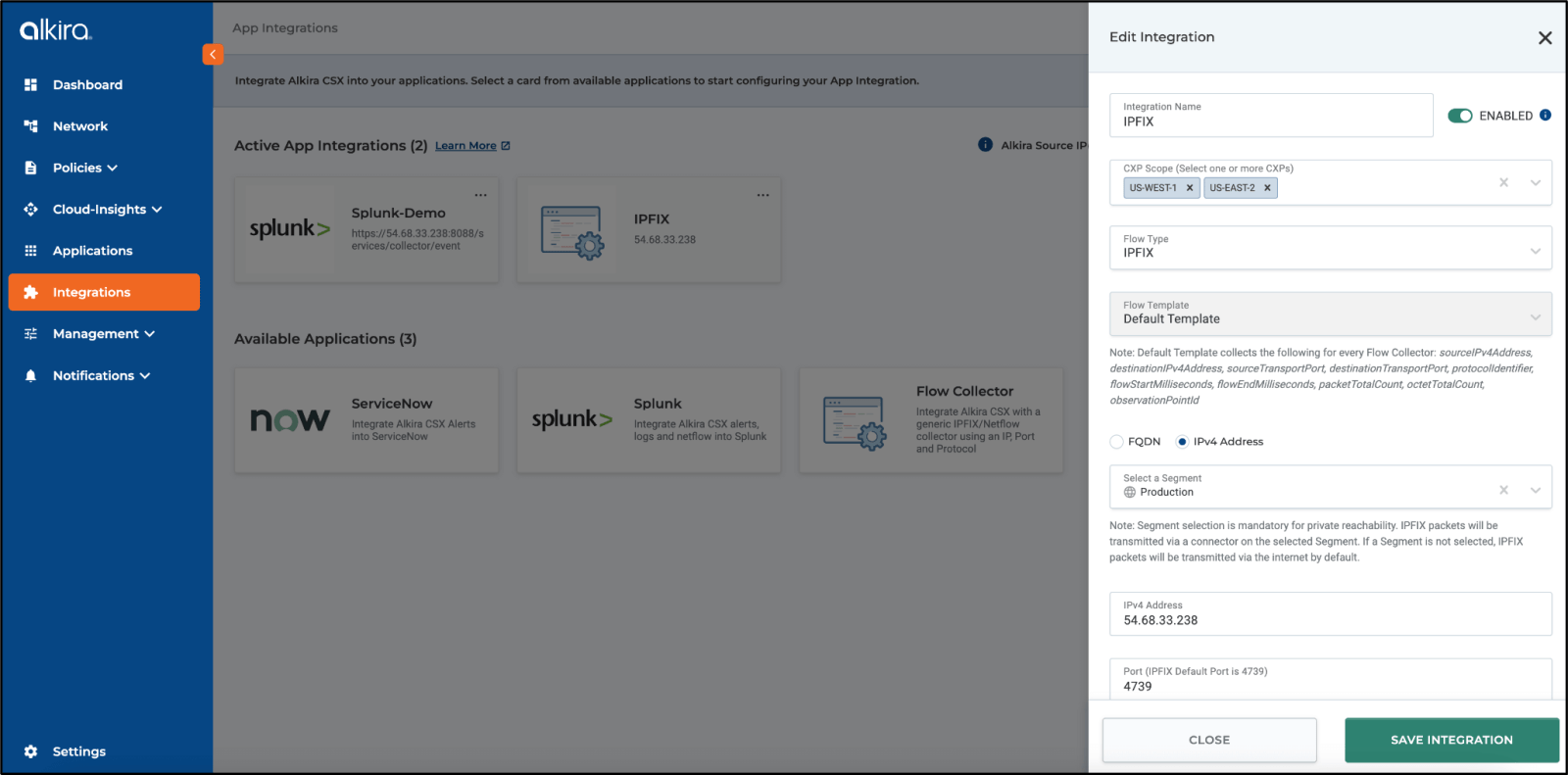 Figure 1: Flow Collector Configuration Example
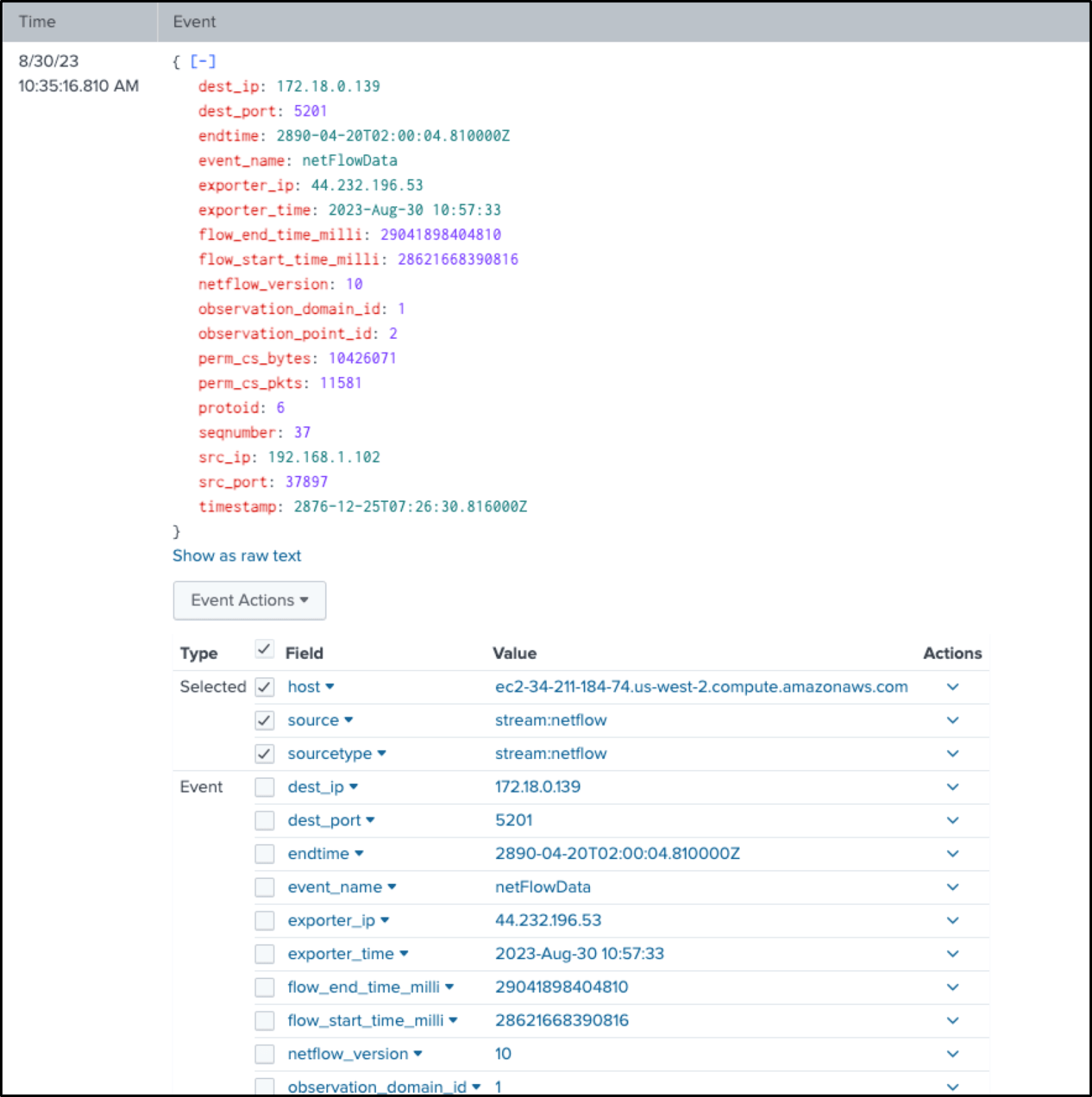 Figure 2: Splunk Flow Collector Example