

Alkira > Resources > Network Infrastructure-as-a-Service > Interactive Cloud Map: Your Visual Guide to Multicloud Infrastructure

Interactive Cloud Map: Your Visual Guide to Multicloud Infrastructure

Interactive Cloud Map: Your Visual Guide to Multicloud Infrastructure

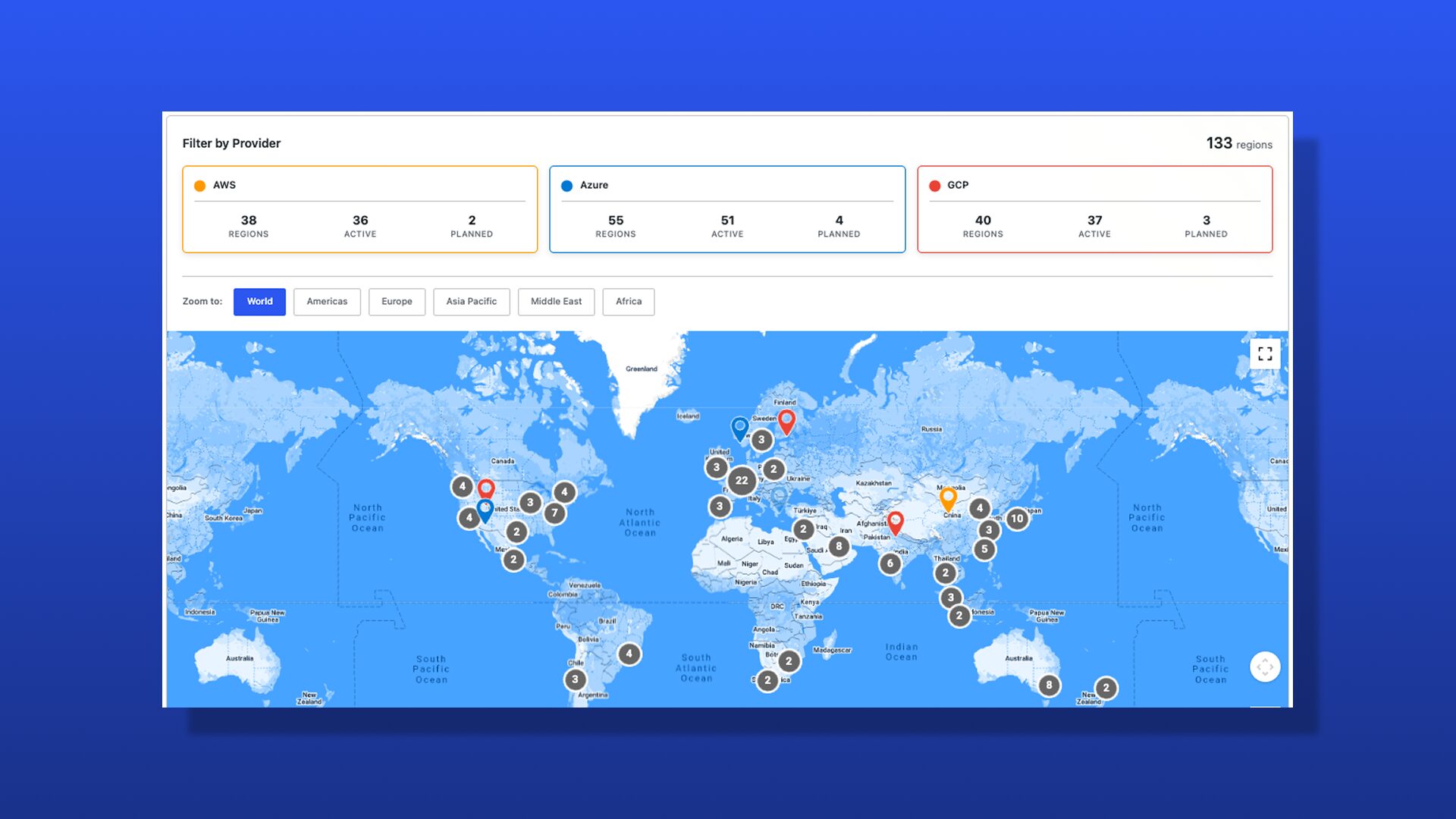
Navigating the multi-cloud landscape just got easier. Our interactive cloud infrastructure map provides a real-time, accurate view of cloud regions across AWS, Azure, and Google Cloud Platform.

Unlike static maps that quickly become outdated, our dynamic visualization stays current with the rapidly evolving cloud ecosystem—showing you where major cloud providers operate today and where they’re expanding tomorrow.

Why This Matters

Whether you’re planning a multi-cloud strategy, evaluating global connectivity options, or simply trying to understand the scope of modern cloud infrastructure, this map delivers instant clarity. It’s designed to help you visualize the art of the possible across the world’s leading cloud platforms.

This resource is valuable for anyone navigating the complexities of cloud infrastructure—from network architects planning global deployments to teams evaluating their connectivity options across multiple cloud providers.

Explore the Interactive Map →

We’re committed to maintaining this as a trusted, go-to resource for the industry. Bookmark it, share it, and come back as cloud providers continue their global expansion.

FAQ

What cloud providers does the map cover? +
The interactive map displays current and planned regions for the three major cloud providers: Amazon Web Services (AWS), Microsoft Azure, and Google Cloud Platform (GCP).
How is this map different from other cloud infrastructure maps? +
Unlike static maps that rely on outdated information, this map stays dynamically updated to reflect the rapidly evolving multi-cloud landscape, providing an accurate view of where cloud providers operate today and where they’re expanding tomorrow.
Who can benefit from using this map? +
Anyone navigating multi-cloud infrastructure—from network architects planning global deployments to teams evaluating connectivity options across cloud providers. It’s especially useful for visualizing the scope and reach of modern cloud infrastructure when planning multi-cloud strategies.