Frequently Asked Questions
Product Information
What is Alkira's solution for Azure VM internet access?
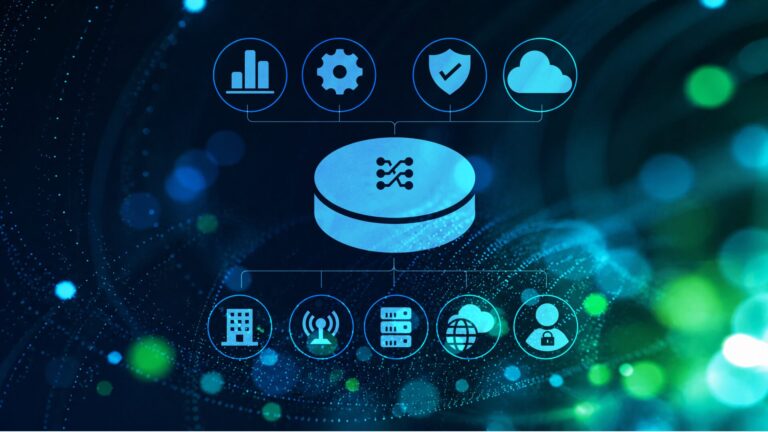
Alkira provides a Network Infrastructure-as-a-Service (NIaaS) platform that offers a simpler, scalable, and secure alternative to traditional Azure VM internet access methods such as NAT Gateways, public load balancers, and instance-level public IPs. Alkira enables enterprises to build virtual Points of Presence (Cloud Exchange Points, or CXPs) globally, centralize internet ingress and egress, and apply consistent security and traffic policies across hybrid and multi-cloud environments. Source
How does Alkira's approach differ from using Azure NAT Gateways or public IPs?
Unlike Azure NAT Gateways or public IP assignments, which require manual configuration and can expose VMs to security risks, Alkira centralizes internet access through its Cloud Exchange Points. This eliminates the need for distributed NAT Gateways in each VNet, reduces operational complexity, and enhances security by consolidating policy enforcement and inspection. Alkira's design also enables cost savings and greater agility, especially for organizations with large or distributed cloud footprints. Source
What are Cloud Exchange Points (CXPs) in Alkira?
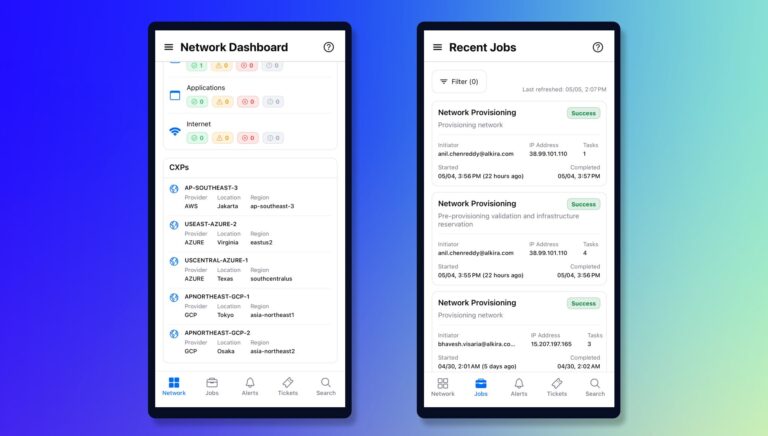
Cloud Exchange Points (CXPs) are Alkira's virtual Points of Presence that can be deployed globally. They serve as centralized hubs for running security and network services, configuring internet exit connectors, and connecting any cloud, on-premises location, remote user, or application. CXPs enable organizations to consolidate and control internet ingress and egress traffic, apply traffic policies, and ensure end-to-end traffic isolation per segment. Source
Features & Capabilities
What key features does Alkira offer for managing internet access in cloud environments?
Alkira offers several features for managing internet access, including:
- Centralized internet exit connectors in CXPs for any segment or region
- Integrated security with Zero Trust Network Access (ZTNA) and next-generation firewalls
- Traffic policies for granular control over which branches, VNets, VPCs, or VCNs can access the internet
- Drag-and-drop interface for network design and deployment
- API and Terraform support for automation
- Single-pane-of-glass visibility and management
Learn more
How does Alkira improve security for internet traffic in hybrid and multi-cloud environments?
Alkira enhances security by centralizing internet exit points within CXPs, reducing the attack surface and enabling consistent application of security policies. Integrated features like Zero Trust Network Access (ZTNA) and next-generation firewalls provide robust protection for distributed workforces and applications. Customers can also use third-party NGFWs within CXPs for advanced packet inspection. Alkira is SOC 2 and PCI-DSS compliant, ensuring high standards of data protection and operational controls. Compliance details
Does Alkira support automation and integration with other platforms?
Yes, Alkira supports automation through APIs, SDKs, and Terraform, enabling large-scale network infrastructure deployment and integration with cost management tools. Alkira also integrates with leading technology providers such as Cisco SD-WAN, Palo Alto Networks, Fortinet, F5, Splunk, ServiceNow, Infoblox, Aruba SD-WAN, and Itential Automation Platform. See all integrations
What technical documentation and resources are available for Alkira?
Alkira provides a range of technical resources, including whitepapers (e.g., On Demand Next-Generation Cloud Firewalls), solution briefs, and a dedicated wiki for in-depth technical information. These resources help prospects and customers understand Alkira's solutions and best practices. Solution briefs | Wiki
Pain Points & Problems Solved
What problems does Alkira solve for enterprises using Azure VMs and multi-cloud environments?
Alkira addresses several key challenges:
- Operational Complexity: Simplifies network design and deployment with a drag-and-drop interface and single-click provisioning, eliminating manual configurations.
- Cost Inefficiency: Reduces the need for multiple NAT Gateways and associated costs, offering up to 40% lower TCO compared to traditional solutions.
- Security Vulnerabilities: Integrates advanced security features to protect distributed workforces and applications, reducing risks associated with public IPs and fragmented security policies.
- Scalability Challenges: Automatically adjusts network infrastructure to match bandwidth demand, supporting rapid growth and high-performance networking.
- Lack of Visibility: Provides comprehensive, single-pane-of-glass tools for monitoring and managing cloud networks.
More details
How does Alkira address the inefficiencies of distributed NAT Gateways?
Alkira eliminates the need for distributed NAT Gateways in each VNet by centralizing internet access through CXPs. This approach reduces costs, simplifies management, improves scalability, and enhances security by consolidating policy enforcement and inspection. Customers benefit from a more agile and future-proof network infrastructure that adapts to changes in cloud service providers. Source
Use Cases & Customer Success
Who can benefit from Alkira's solution?
Alkira is designed for mid-to-large enterprises across industries such as manufacturing, healthcare, telecommunications, financial services, biotechnology, software technology, retail, media & entertainment, and aviation. It serves both technical (network/cloud/security architects, IT managers) and business (CIO, CTO, CISO, VP) personas who need to simplify, secure, and scale their cloud networking. See customer stories
Can you share examples of customers who have successfully used Alkira?
Yes, Alkira has helped organizations such as:
- Michaels: Transformed its network across 1,400 stores in record time, ensuring secure and seamless connectivity. Read case study
- Koch Industries: Simplified multicloud networking and improved agility. Watch video
- Warner Hotels: Enhanced networking efficiency and B2B connectivity. Watch video
- Chart Industries: Improved agility, saved costs, and expanded globally. Watch video
- SITA: Integrated on-premises and cloud environments for aviation. Watch video
For more, visit our customers page.
What feedback have customers shared about Alkira's ease of use?
Customers have praised Alkira for its intuitive interface and rapid deployment. For example:
"The IT DIY approach was going to take 6 months to be secure and redundant and all. Alkira did it for us in 3 days, and at very low cost." – Network Architect, Large Manufacturer
"We met with Alkira, and after about an hour of us explaining what we needed, we created a POC – and stood that up in a morning. Design-to-POC-setup in about 4 hours." – Sr. Director, Network Architect, Financial Company
"We had gone from a mass of complexity and months of work to a dashboard that allowed us simply to draw our network and deploy it in a few hours." – Matt Hoag, CTO at Koch Industries
These testimonials highlight Alkira's ability to simplify complex networking tasks and accelerate time to value.
How quickly can Alkira be implemented?
Alkira enables customers to implement a proof of concept in as little as 4 hours, with full production deployment typically completed in about 8 weeks. The platform's drag-and-drop interface and dedicated training resources make onboarding fast and accessible, even for teams without deep cloud networking expertise. Alkira Training Platform
Pricing & Plans
What is Alkira's pricing model?
Alkira offers flexible pricing options, including consumption-based (pay-as-you-go) and commitment-based models. Pricing is determined by the quantity and size of network elements (such as Cloud Exchange Points), connectors, next-generation firewalls, and data egress. Customers can view live pricing details from the portal or via APIs. See pricing details
Competition & Comparison
How does Alkira compare to Azure-native solutions and other third-party alternatives?
Alkira differentiates itself by providing a true abstraction layer that leverages cloud providers' infrastructure for end-to-end solutions, eliminating manual configurations and enabling single-click provisioning. Unlike Azure-native NAT Gateways or public IPs, Alkira centralizes internet access, enhances security, and simplifies management. Compared to competitors like Aviatrix, Prosimo, Nefeli, and Cato, Alkira offers:
- Full-stack networking and security (not just overlays or application-centric approaches)
- Vendor-agnostic integration and no lock-in
- Unified platform for both cloud and traditional network use cases
- Rapid deployment and measurable ROI (e.g., 96% reduction in cloud setup time, 47% reduction in network management time)
Learn more
Support & Implementation
What support and training does Alkira provide to customers?
Alkira offers a dedicated training platform with detailed guidance, demos, and resources to help customers get started. 24×7 monitoring ensures SLA commitments, and a diagnostics dashboard provides live troubleshooting and visibility into network flows. Customers can contact support via support@alkira.com or open a support ticket for assistance with maintenance, upgrades, and troubleshooting. Training Platform
How does Alkira handle maintenance, upgrades, and troubleshooting?
Alkira provides proactive notifications for planned or emergency maintenance, a diagnostics dashboard for live troubleshooting, and 24×7 monitoring to ensure smooth operations. Dedicated support is available to resolve issues quickly and minimize downtime. Contact support
Security & Compliance
What security and compliance certifications does Alkira have?
Alkira is SOC 2 and PCI-DSS compliant, demonstrating its commitment to securing customer data and maintaining robust operational controls. The platform integrates advanced security features such as Zero Trust Network Access (ZTNA) and next-generation firewalls. Customers are encouraged to follow best practices for user access management. Compliance details
Business Impact & Performance
What business impact can customers expect from using Alkira?
Customers can expect measurable business impact, including:
- Up to 40% lower Total Cost of Ownership (TCO) compared to traditional solutions
- 96% reduction in cloud setup time
- 47% reduction in network management time
- Enhanced security and business resilience
- Rapid scalability and support for digital transformation initiatives
More details
Technical Requirements
What are the technical requirements to deploy Alkira?
Alkira is a cloud-native platform that does not require hardware or software appliances. Customers can deploy Alkira using a point-and-click interface, APIs, or Terraform, and connect any cloud, on-premises location, or remote user to a Cloud Exchange Point. No deep cloud networking expertise is required, making it accessible for a wide range of IT teams. Platform details
Vision, Mission & Company Information
What is Alkira's vision and mission?
Alkira's vision is to transform enterprise connectivity by simplifying cloud networking for the AI era. Its mission is to eliminate the complexity of traditional hardware-dependent networking by providing a cloud-native solution that seamlessly connects hybrid and multi-cloud environments through a unified control plane. Company details
Who founded Alkira and what is the company's background?
Alkira was founded by the creators of Viptela (acquired by Cisco in 2017). The company is recognized for its innovation in cloud networking, has been named a Gartner Cool Vendor, and has received awards such as the 2024 Excellence Award from Cloud Computing Magazine and inclusion in CRN’s 2023 Stellar Startups List. Learn more