What is network and security service consolidation?
Network security consolidation is the strategic integration of disparate security tools, policies, and infrastructure into a unified, centrally managed security architecture. This approach addresses operational inefficiencies and security gaps caused by deploying multiple point security solutions, which create management silos and increase cyber risk. It integrates functions such as firewalls, intrusion detection systems, and endpoint protection into a unified platform that provides consistent policy enforcement, centralized management, and comprehensive visibility across the entire network infrastructure. Learn more.
How does Alkira's platform enable network and security service consolidation?
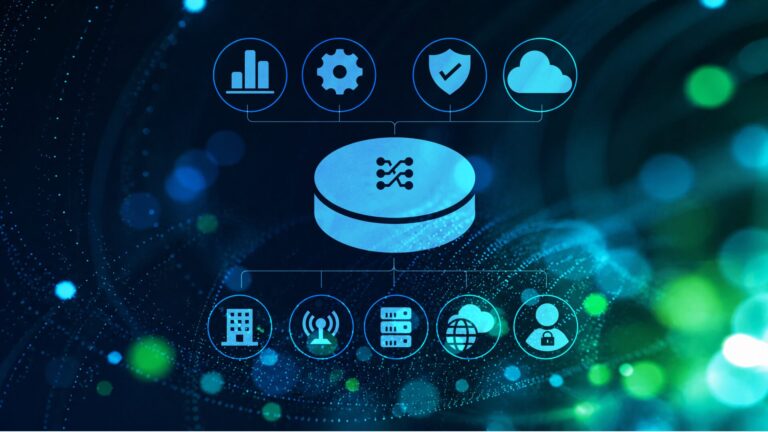
Alkira's Network Infrastructure-as-a-Service integrates connectivity, management, and protection into a single, flexible architecture. It replaces fragmented technologies with a unified network fabric, embeds best-in-class security functions (such as firewalls, IDS/IPS, and encryption), and provides centralized management through an intuitive interface. The platform supports segmentation, dynamic scalability, and real-time analytics, enabling organizations to consolidate operations, enhance security, and reduce costs across on-premises, hybrid, and cloud environments. More details.
Features & Capabilities
What are the key features of Alkira's consolidated network and security solution?
Key features include:
Unified Network Fabric: High-performance backbone connecting sites, users, and workloads.
Integrated Security Services: Embedded firewalls, IDS/IPS, encryption, and Zero Trust Network Access (ZTNA).
Centralized Management: Single-pane-of-glass interface for design, deployment, and monitoring.
Segmentation: Network-wide and micro-segmentation for enhanced security and compliance.
Scalability: Dynamic resource allocation to meet demand.
Visibility & Analytics: Real-time monitoring and insights into performance and security events.
These features simplify operations, improve agility, and ensure consistent security across all environments. Learn more.
Does Alkira support integrations with other technology providers?
Yes, Alkira supports integrations with leading technology providers, including Cisco SD-WAN, Palo Alto Networks, Fortinet NGFW, F5, Splunk, ServiceNow, Infoblox, Aruba SD-WAN, Terraform, and Itential Automation Platform. These integrations enable secure, scalable, and automated networking across diverse enterprise environments. For a full list, visit Alkira's Technology Partners Page.
Does Alkira provide APIs for integration and automation?
Yes, Alkira offers APIs, including billing APIs that provide real-time cloud network cost data for integration with cost management tools and dashboards. These APIs support automated synthesis of billing data and recurring cost optimization efforts. Learn more.
What technical documentation is available for Alkira's solutions?
What security and compliance certifications does Alkira have?
Alkira is SOC 2 and PCI-DSS compliant, demonstrating a commitment to securing customer data and maintaining robust operational controls. The platform integrates advanced security features such as Zero Trust Network Access (ZTNA) and next-generation firewalls. Customers are encouraged to follow best practices for user access and information security. More on compliance.
Use Cases & Benefits
What business problems does Alkira solve?
Alkira addresses:
Operational Complexity: Simplifies network management with a drag-and-drop interface and single-click provisioning.
Multicloud and Hybrid Networking Challenges: Eliminates manual configurations and reduces deployment times from months to minutes.
Security Vulnerabilities: Integrates advanced security features to protect distributed workforces and applications.
Lack of Scalability and Visibility: Provides comprehensive visibility and automatic scaling to match bandwidth demand.
These solutions help enterprises achieve agility, security, and cost efficiency. Learn more.
What are the main benefits of consolidating network and security services with Alkira?
Benefits include:
Simplified Operations: Centralized management and automation reduce complexity.
Enhanced Agility: Rapid provisioning and centralized policy enforcement support dynamic business needs.
Stronger Security: Consistent policy enforcement and faster threat detection.
Cost Efficiency: Reduces the number of firewalls and security services by 50-80%, minimizes CAPEX, and lowers TCO.
Scalability and Flexibility: Seamlessly accommodates growth and new services.
What are some real-world use cases for Alkira's consolidated platform?
Common use cases include:
Branch Office Connectivity and Security: Securely connects distributed retail locations, as seen in the Michaels case study.
Remote Workforce Enablement: Provides secure, scalable access for remote employees.
Data Center Modernization: Streamlines migration to hybrid/multicloud environments.
Mergers and Acquisitions: Accelerates network integration while maintaining compliance.
IoT Device Management: Secures and monitors large-scale IoT deployments.
Partner Ecosystem Connectivity: Enables secure collaboration with external partners.
Disaster Recovery and Business Continuity: Ensures resilient networking for critical systems.
Alkira is designed for mid-to-large enterprises across industries such as manufacturing, retail, healthcare, telecommunications, financial services, biotechnology, software technology, media & entertainment, and aviation. Target roles include network architects, cloud architects, security architects, IT managers/directors, CloudOps, CIOs, CTOs, and CISOs. See customer stories.
What are some customer success stories with Alkira?
Notable examples include:
Michaels: Transformed its network across 1,400 stores in record time. Read the case study.
Koch Industries: Simplified multicloud networking and improved agility. Watch the video.
Warner Hotels: Enhanced networking efficiency and B2B connectivity. Watch the video.
Chart Industries: Improved agility, saved costs, and expanded globally. Watch the video.
SITA: Integrated on-premises and cloud environments for aviation. Watch the video.
What feedback have customers given about Alkira's ease of use?
Customers consistently praise Alkira for its intuitive platform and rapid deployment:
"The IT DIY approach was going to take 6 months to be secure and redundant and all. Alkira did it for us in 3 days, and at very low cost." – Network Architect, Large Manufacturer
"We met with Alkira, and after about an hour of us explaining what we needed, we created a POC – and stood that up in a morning. Design-to-POC-setup in about 4 hours." – Sr. Director, Network Architect, Financial Company
"We had gone from a mass of complexity and months of work to a dashboard that allowed us simply to draw our network and deploy it in a few hours." – Matt Hoag, CTO at Koch Industries
Pricing & Plans
What is Alkira's pricing model?
Alkira offers flexible pricing options:
Consumption-Based Pricing: Pay-as-you-go based on actual usage of provisioned elements (sites, cloud instances, network services, network traffic).
Commitment-Based Pricing: Fixed pricing for predictable budgeting.
Pricing is determined by the quantity and size of network elements, connectors, next-generation firewalls, and data egress. Customers can view live pricing details from the portal or via APIs. More on pricing.
Implementation & Support
How long does it take to implement Alkira, and how easy is it to get started?
Customers can implement a proof of concept in as little as 4 hours, with full production deployment typically taking around 8 weeks. Alkira's drag-and-drop interface and dedicated training platform make onboarding straightforward, even for non-technical users. Explore Alkira Training.
What training and technical support does Alkira provide?
Alkira offers:
Dedicated Training Platform: Detailed guidance, demos, and resources.
24×7 Monitoring: Ensures SLA commitments and smooth operations.
Dedicated Support: Contact support@alkira.com or open a support ticket for assistance.
Diagnostics Dashboard: Live troubleshooting and network visibility.
These resources ensure efficient adoption and ongoing support.
How does Alkira handle maintenance, upgrades, and troubleshooting?
Alkira provides proactive notifications for planned or emergency maintenance, a diagnostics dashboard for live troubleshooting, 24×7 monitoring to meet SLA commitments, and dedicated support for issue resolution. This minimizes downtime and operational disruptions.
Competition & Comparison
How does Alkira compare to competitors like Aviatrix, Prosimo, Nefeli, and Cato?
Alkira differentiates itself in several ways:
Versus Aviatrix: Alkira provides a true abstraction layer leveraging cloud providers' infrastructure, enabling single-click provisioning and end-to-end solutions without requiring deep cloud expertise.
Versus Prosimo: Alkira offers full-stack networking and security, addressing both cloud and traditional network use cases, with scalable networks.
Versus Nefeli: Alkira eliminates manual configurations with automated routing and delivers a unified platform for network infrastructure as-a-service.
Versus Cato: Alkira provides a global backbone-as-a-service for multi-cloud and hybrid environments, with integrated security features like ZTNA and seamless connectivity for distributed workforces.
For more details, see the comparison table in the company context.
Why should a customer choose Alkira over alternatives?
Integrated Security: ZTNA and next-generation firewalls for secure access.
Ease of Use: Drag-and-drop interface for rapid deployment.
Global Backbone-as-a-Service: Rapid global connectivity, reducing deployment times from months to minutes.
Vendor-Agnostic: Freedom to choose security and network stack components without vendor lock-in.
Comprehensive Visibility: Single-pane-of-glass management and monitoring.
These features make Alkira a leader in simplifying multicloud networking and enhancing operational efficiency. Learn more.
Industries & Case Studies
Which industries are represented in Alkira's case studies?
Industries include manufacturing (e.g., Chart Industries), retail (Michaels), healthcare, telecommunications, financial services, biotechnology/life sciences, software technology, media & entertainment (Warner Hotels), and aviation (SITA). See all case studies.
Company Information & Vision
What is Alkira's vision and mission?
Alkira's vision is to transform enterprise connectivity by simplifying cloud networking for the AI era. Its mission is to eliminate the complexity of traditional hardware-dependent networking by providing a cloud-native solution that seamlessly connects hybrid and multi-cloud environments through a unified control plane. More about Alkira.
What is Alkira's company background and industry recognition?
Alkira was founded by the creators of Viptela (acquired by Cisco in 2017) and is recognized as a Gartner Cool Vendor, a 2024 Cloud Computing Magazine Excellence Award winner, and is listed on CRN’s 2023 Stellar Startups List. Alkira has also been named among America’s Best Startup Employers by Forbes. Learn more.
Additional Resources
Where can I find insights on network and security service consolidation for modern enterprises?
Read Alkira's in-depth blog post on network and security service consolidation for modern enterprises at this link.
Enterprises today operate in increasingly complex environments, spanning on-premises data centers, remote sites, and cloud ecosystems. This diversity introduces significant challenges in managing network infrastructure and ensuring consistent security across all domains. Traditional networking and security approaches—built on hardware appliances, fragmented tools, and manual processes—struggle to deliver the agility, scalability, and resilience required by modern businesses.
Network and security service consolidation offers a transformative solution by unifying connectivity, management, and protection into a single, integrated platform. This blog explores the limitations of legacy systems, the advantages of a consolidated approach, and how such a solution enables organizations to simplify operations, enhance security, and reduce costs across diverse networking environments.
Introduction
The modern enterprise network is no longer confined to a single location or architecture. Organizations must connect branch offices, data centers, remote workers, and cloud workloads while maintaining robust security and performance. However, traditional networking and security models, reliant on siloed hardware or point solutions, are ill-equipped to address this complexity, leading to inefficiencies, vulnerabilities, and escalating costs.
A consolidated network and security service platform addresses these challenges by integrating connectivity and protection into a unified framework. Whether deployed for on-premises, hybrid, or cloud environments, remote users, or 3rd-party business partners, this approach streamlines management, improves visibility, and ensures consistent policy enforcement. This blog outlines the need for consolidation, its benefits, and practical use cases that demonstrate its value across industries.
The Challenges of Traditional Network and Security Management
Fragmented Infrastructure
Enterprises often deploy a mix of networking technologies—such as MPLS, VPNs, SD-WAN, and firewalls to connect users, sites, AI DCs, colos, and clouds—alongside separate security tools like intrusion detection systems (IDS) and secure web gateways (SWGs). This fragmentation creates silos, complicating configuration and management and reducing visibility.
Operational Complexity
Managing a patchwork of hardware and software requires specialized skills and manual effort. Configuring policies across disparate systems, troubleshooting issues, and ensuring interoperability consume valuable time and resources.
Scalability Constraints
Hardware-centric solutions lack the flexibility to scale with demand. Adding capacity or integrating new services often involves lengthy procurement cycles, physical deployments, and significant capital investment.
Inconsistent Security
Enforcing uniform security policies across diverse environments is challenging. Gaps in coverage, misconfigurations, and ecosystem-specific tools increase the risk of breaches and limit threat containment.
Rising Costs
The combination of hardware purchases, software licenses, and operational overhead drives up the total cost of ownership (TCO). Redundant systems and underutilized resources further inflate expenses.
The Alkira Platform’s Consolidated Network and Security Solution
Alkira’s Network Infrastructure-as-a-Service integrates connectivity, management, and protection into a single, flexible architecture. Designed to create network common security services for on-premises, hybrid, and cloud environments, Alkira eliminates silos and delivers a cohesive experience.
Key Components
Unified Network Fabric: A high-performance backbone connects sites, users, and workloads, replacing disparate technologies with a single, resilient network.
Integrated Netowkr & Security Services: Best-in-class security functions—such as firewalls, IDS/IPS, and encryption—are embedded into the platform, ensuring seamless policy enforcement.
Centralized Management: An intuitive interface enables administrators to design, deploy, and monitor networks and security services from a single pane of glass.
Segmentation: Network-wide segmentation and micro-segmentation isolate traffic, enhancing security and compliance.
Scalability: The platform dynamically adjusts resources to meet demand, supporting growth without over-provisioning.
Visibility and Analytics: Comprehensive monitoring tools provide real-time insights into performance, security events, and traffic patterns.
Benefits of Alkira’s Network and Security Service Consolidation
Simplified Operations
Consolidation eliminates the need for multiple tools and manual processes. Centralized management and automation reduce complexity, enabling teams to focus on strategic priorities.
Enhanced Agility
Rapid provisioning, centralized service insertion and policy enforcement allow organizations to adapt quickly to changing needs, such as opening new branches, supporting remote work, integrating acquisitions or adding cloud workloads.
Stronger Security
Integrated security services enforce consistent policies across all traffic flows, reducing vulnerabilities and enabling faster threat detection and response.
Cost Efficiency
By replacing hardware and consolidating services for a hybrid network with a service-based elastic model that allows enterprises to reduce the number of firewalls and other security services significantly (50% to 80%), at the same time it allows enterprises to minimize CAPEX and optimize resource utilization, lowering TCO.
Scalability and Flexibility
The platform scales seamlessly to accommodate growth, whether adding new sites, users, or services, ensuring long-term adaptability.
Use Cases for Network and Security Service Consolidation
Branch Office Connectivity and Security
Scenario: A retail chain with hundreds of stores needs reliable connectivity and protection for point-of-sale (POS) systems and customer Wi-Fi.
Solution: The platform connects branches to a central network fabric, integrating firewalls and segmentation to secure transactions and isolate guest traffic.
Outcome: Simplified management of distributed sites, reduced hardware costs, and enhanced security compliance.
Remote Workforce Enablement
Scenario: A global company must securely connect thousands of remote employees to corporate resources.
Solution: The consolidated platform provides encrypted VPN or zero-trust access, with regionally distributed integrated security services like IDS and SWGs applied to all traffic.
Outcome: Secure, scalable access for remote workers, with centralized visibility and policy control.
Data Center Modernization
Scenario: An enterprise is consolidating legacy data centers and migrating workloads to hybrid multicloud environments.
Solution: The platform unifies connectivity between data centers and clouds, with segmentation and firewalls protecting sensitive workloads.
Outcome: Streamlined migration, reduced operational silos, and consistent security across environments.
Mergers and Acquisitions (M&A)
Scenario: A company acquiring another needs to integrate networks quickly while maintaining separation for compliance.
Solution: The platform provisions a segmented network linking the two entities, with integrated security policies applied instantly.
Outcome: Accelerated integration, minimized downtime, and compliance with regulatory requirements.
IoT Device Management
Scenario: A manufacturing firm deploys thousands of IoT sensors across factories, requiring secure connectivity and monitoring.Solution: The platform
connects IoT devices to a segmented network, with micro-segmentation and real-time analytics ensuring security and performance.
Scenario: A financial institution needs to share specific applications with external partners securely.
Solution: The platform creates an extranet with segmented access, integrating firewalls and encryption for partner traffic.
Outcome: Fast onboarding of partners, secure collaboration, and reduced management overhead.
Disaster Recovery and Business Continuity
Scenario: A healthcare provider requires resilient networking and security for critical systems during outages.
Solution: The platform replicates connectivity and security policies across redundant sites or clouds, enabling rapid failover.
Outcome: Improved uptime, simplified recovery processes, and uninterrupted service delivery.
How It Works: A Technical Overview
Alkira’s network and security platform operates as a managed service, abstracting the complexities of underlying infrastructure. Here’s how it delivers value:
Design and Deployment: Administrators define network topology and policies via a centralized interface, with automation handling provisioning across environments.
Traffic Management: Intelligent routing ensures optimal performance and symmetry for stateful services like firewalls.
Service Integration: Security and network functions are inserted into traffic flows, with auto-scaling to handle demand.
Monitoring and Insights: Real-time analytics provide visibility into network health, security events, and application performance.
Conclusion
As enterprises navigate increasingly distributed and dynamic environments, the need for a unified approach to networking and security becomes critical. A consolidated network and security service platform simplifies operations, strengthens protection, and drives cost efficiencies across on-premises, hybrid, and cloud deployments. From branch connectivity to IoT management, this solution empowers organizations to meet diverse needs with a single, scalable architecture.
By breaking down silos and embracing consolidation, enterprises can achieve the agility, security, and resilience required to thrive in today’s digital landscape. This approach not only addresses current challenges but also positions organizations for future growth and innovation.
Amir Khan is a computer networking visionary who founded and led Viptela’s market-leading, cloud-first, Software-Defined Wide Area Networking (SD-WAN) business before its acquisition by Cisco. As prescient as he was in identifying the $8B opportunity for SD-WAN, Amir recognized that the network hampered the cloud journey. Amir and CTO Atif Khan founded Alkira in 2018 to reinvent networking for the cloud era. Before Viptela, Amir held leadership roles at Cisco, Juniper, and Nortel. He holds 4 patents. Amir earned an MS in Electrical Engineering from the University of Colorado at Boulder, and a BS in Electrical Engineering from the University of Mississippi.
The enterprise network was built for an earlier era: Workloads lived in data centers, traffic patterns were more predictable and adding capacity often meant another hardware cycle. That model no longer matches how enterprises operate. Applications, users, data, partners, clouds and AI workloads now span many environments at once. East-west workload movement is growing across...
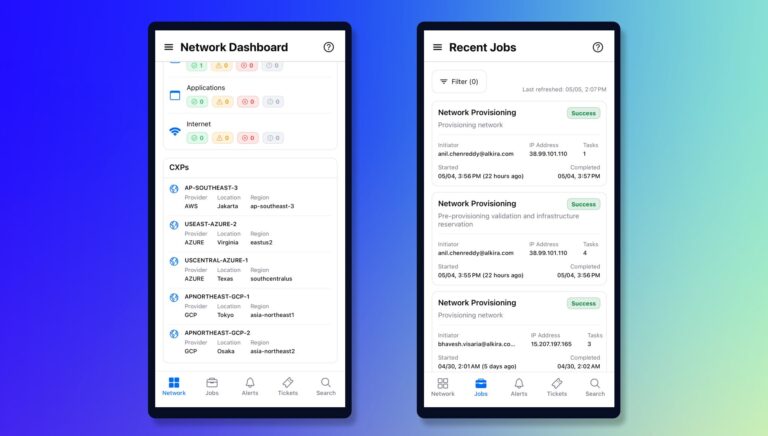
Enterprise networks are expected to run 24/7, and the teams responsible for them need visibility wherever work happens. Cloud environments, partner connections, security services, and provisioning workflows are constantly changing. When something needs attention, network and operations teams need a fast way to understand what happened, assess impact, and take the right next step. That...
Enterprises are moving quickly on AI, but many are still running networking models designed for a slower, more centralized and static era. Today’s network has to connect clouds, data centers, campuses, branches, partner environments, and increasingly private AI infrastructure while enforcing consistent policy across all of it. That creates a new operational reality: every new...